perfect
"my son loves these! great quality and love the pouch that came with it!"

 Rooted in Neurodevelopment
See the Guided Lesson Plan
 High quality materials
 Eco-Happy
 Fun & Engaging Activities
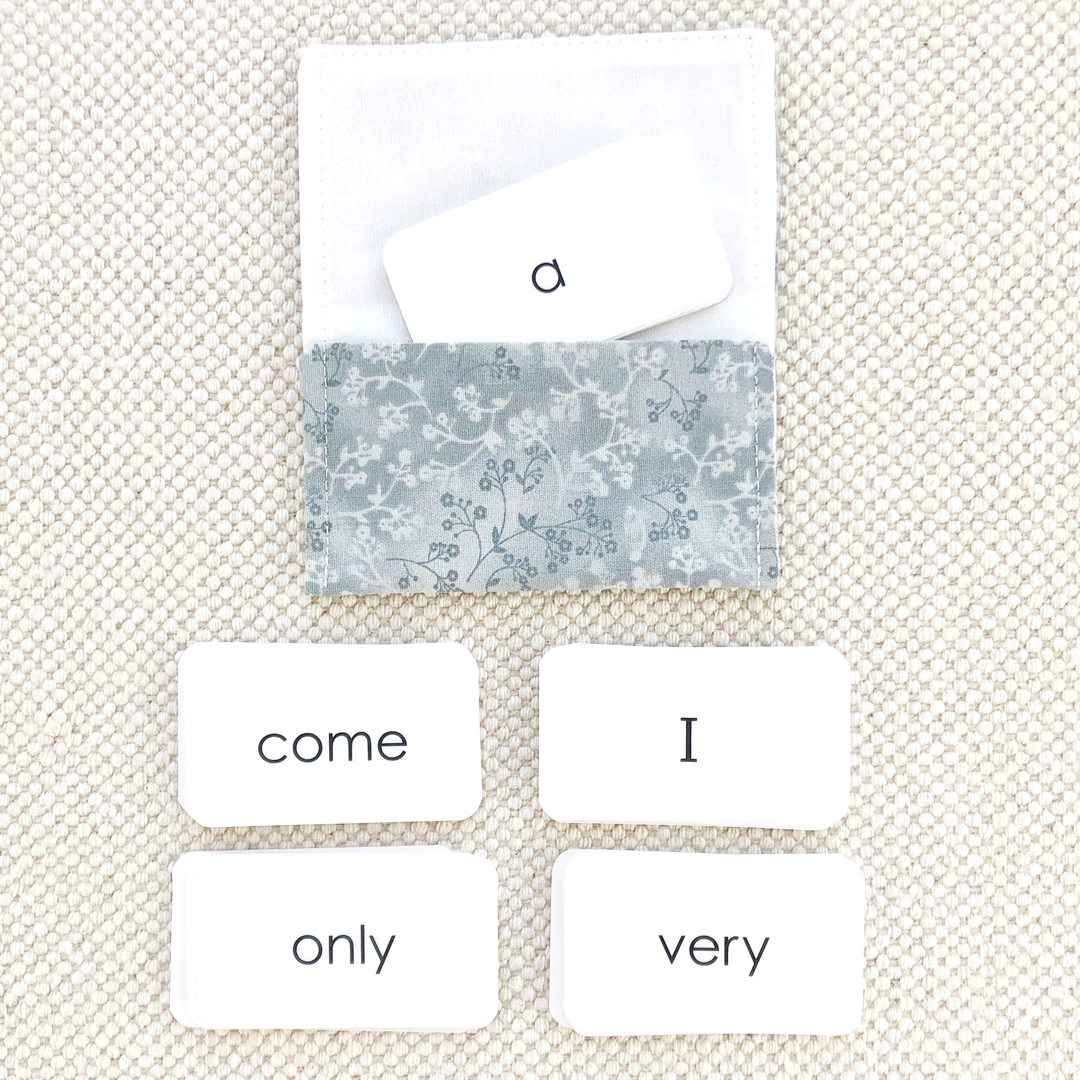
Puzzle words are the Montessori name for high-frequency words that don't follow regular phonetic rules, like come and do. You may also know them as sight words, tricky words, or heart words. Our set of 40 laminated puzzle word cards is ready for the shelf once students are reading phonetic words.
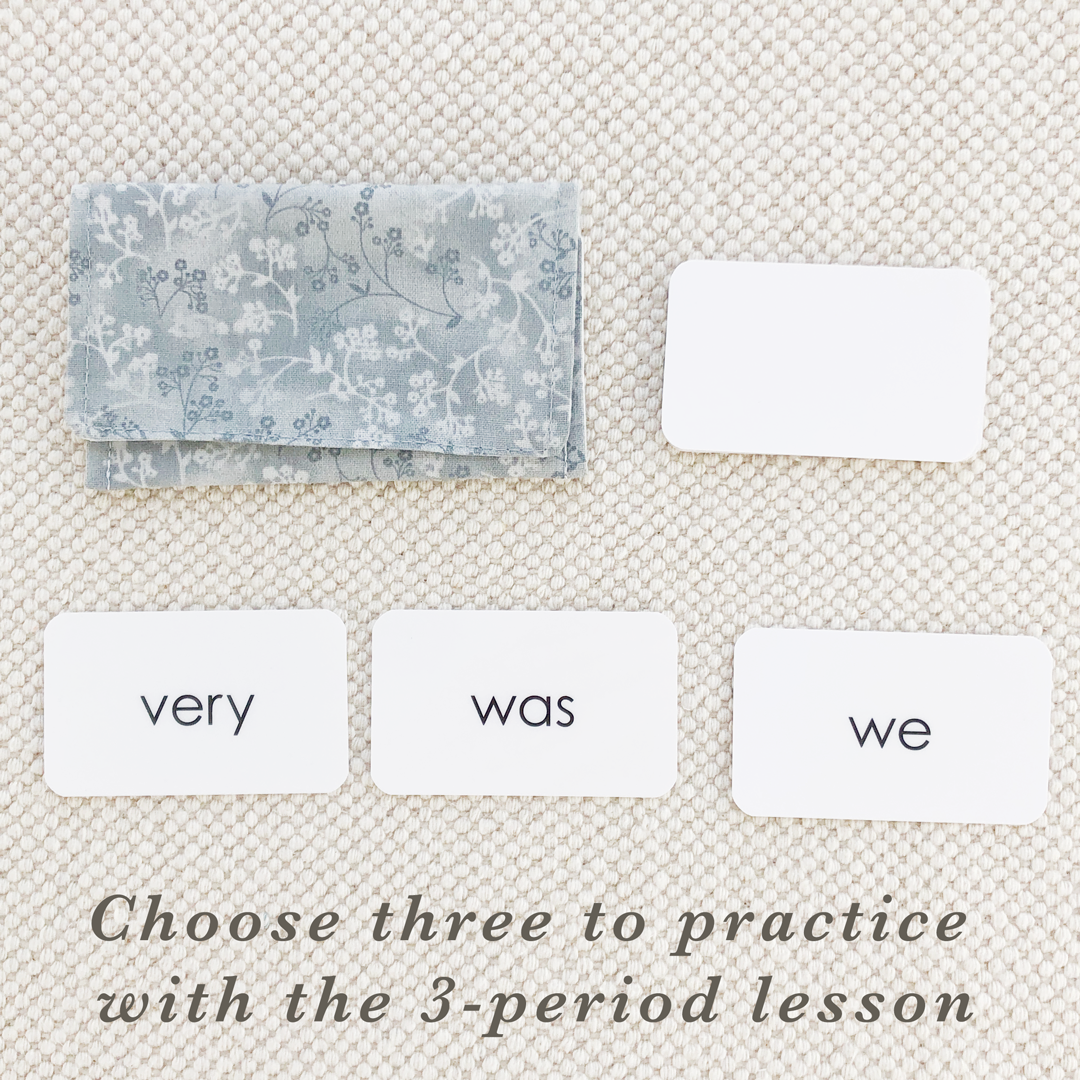
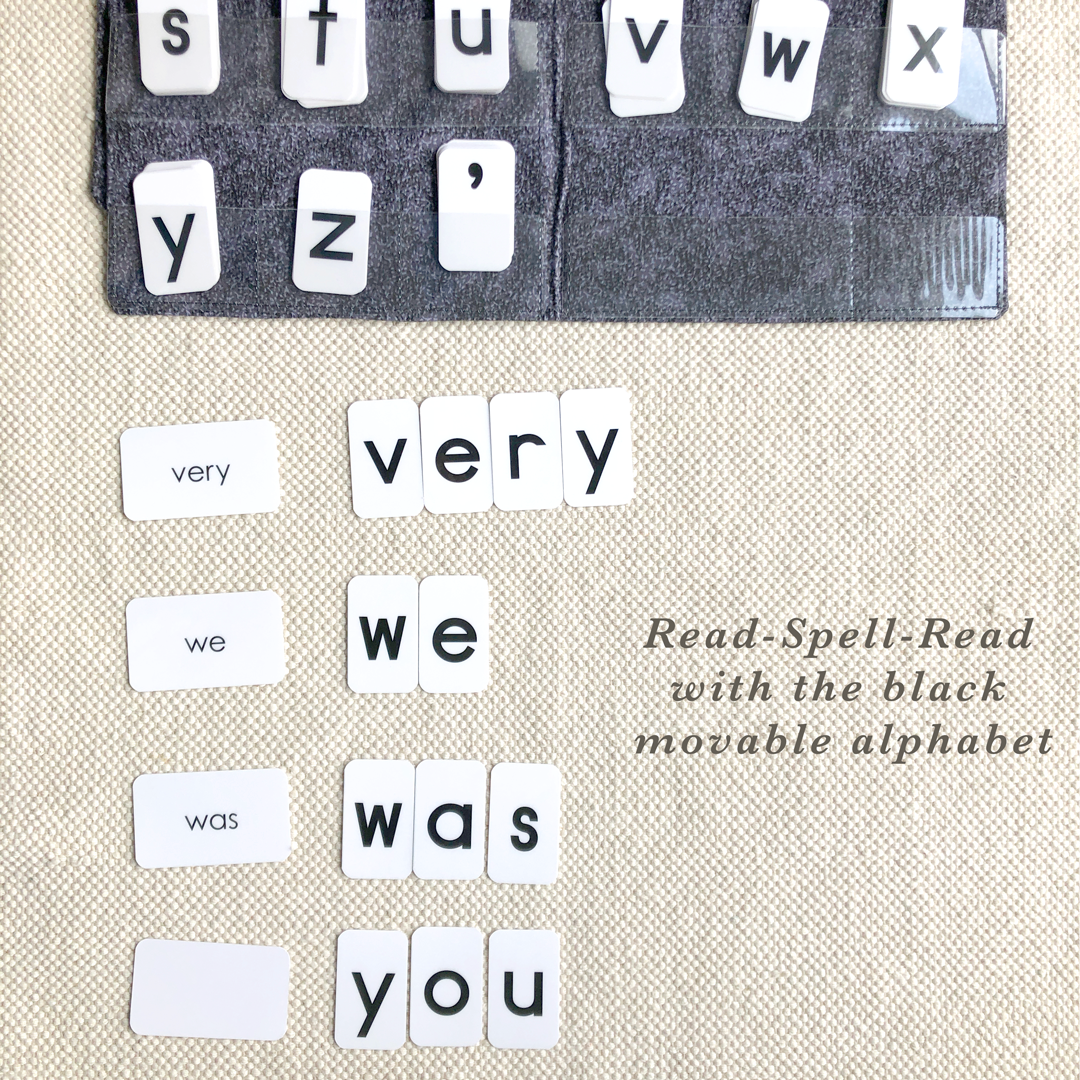
Puzzle words aren't meant to be memorized as whole shapes. Most follow the rules for part of the word, with only one sound or spelling breaking the pattern. In come, the c and m sound out as expected; only the o and silent e are the puzzle. Students sound out what they can and notice the tricky part. That habit connects these words to the phonics they already know.
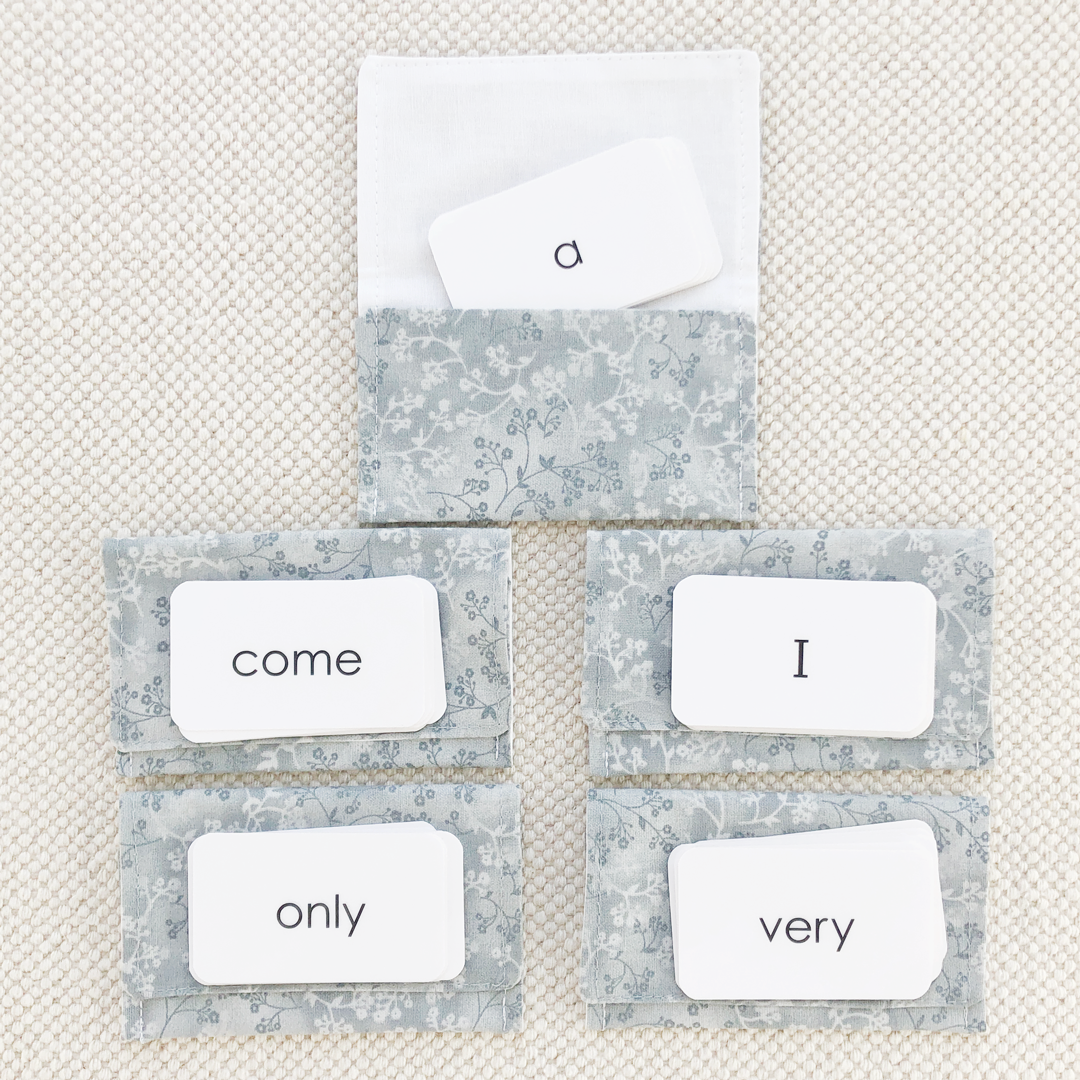
Add small cloth pouches for tidy, student-accessible display: one pouch to rotate 8 words at a time, or five to have all 40 words out at once.
Prefer to make these yourself? Puzzle Words are also available as a digital file.
Created by a Montessori teacher. Eco-printed in our rural New England office.
Made in the USA. CPSIA compliant.
Fluent readers recognize most words instantly, without stopping to sound them out. In Scarborough's (2001) reading rope, this automatic word recognition is one of the strands that frees a reader to focus on meaning. Many of the most common words in English are irregular, so students meet them constantly in real books. Words become instant "sight words" through orthographic mapping, which means connecting a word's sounds to its letters. This works for irregular words too. When students sound out the regular parts and pay attention to the puzzle part, the word sticks. Memorizing a word as a whole shape skips that step.
Because most of it does! Sounding out shows students that even strange-looking words have phonetic clues. Have fun with it. Sometimes you'll uncover an old pronunciation. The k, g, and h in knight were once pronounced! Students love learning that spellings that seem odd today once made sense.
Typically PreK through 2nd grade (about ages 4 to 8), whenever a student can blend sounds and read simple phonetic words. Puzzle words are also helpful for:
Choose options
Overall rating: 5.0 / 5 from 2 reviews.
Review topics: [].
"my son loves these! great quality and love the pouch that came with it!"
"We love these cards!"
Download a PDF of our materials