Delightful
"Love the way these offer such an organized way to contain materials."


 Teacher Favorite
 Rooted in Neurodevelopment
See the Guided Lesson Plan
 High quality materials
 Eco-Happy
 Fun & Engaging Activities
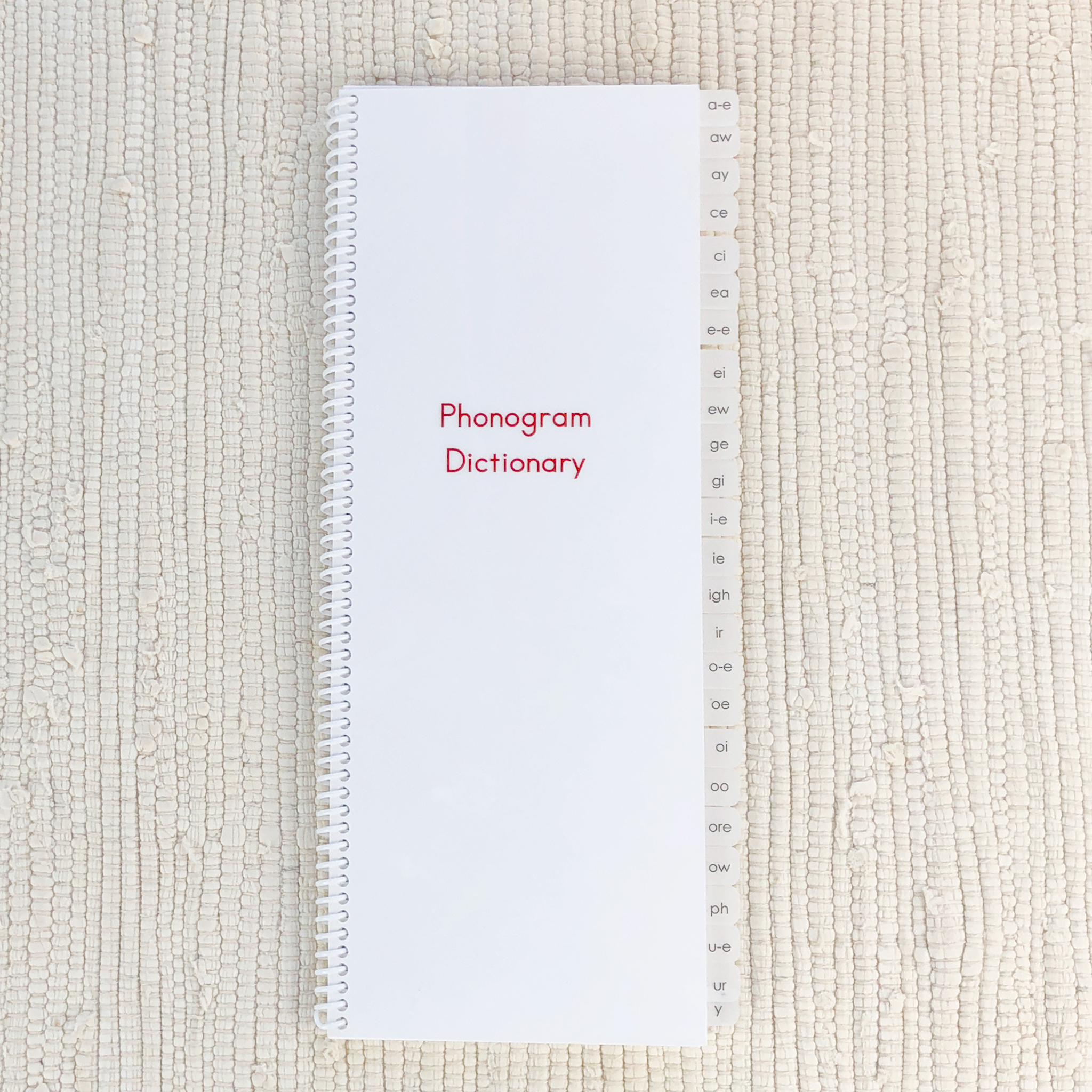
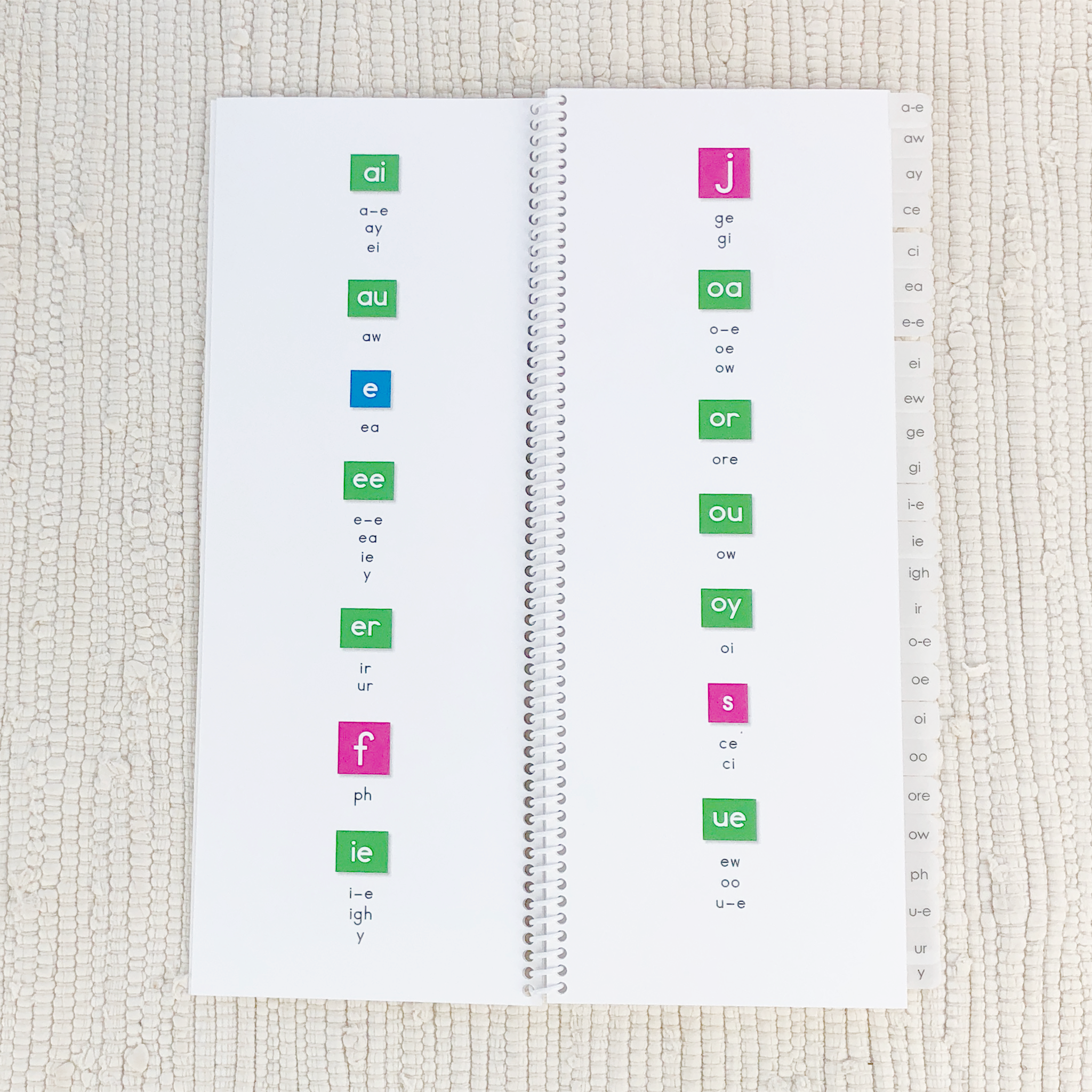
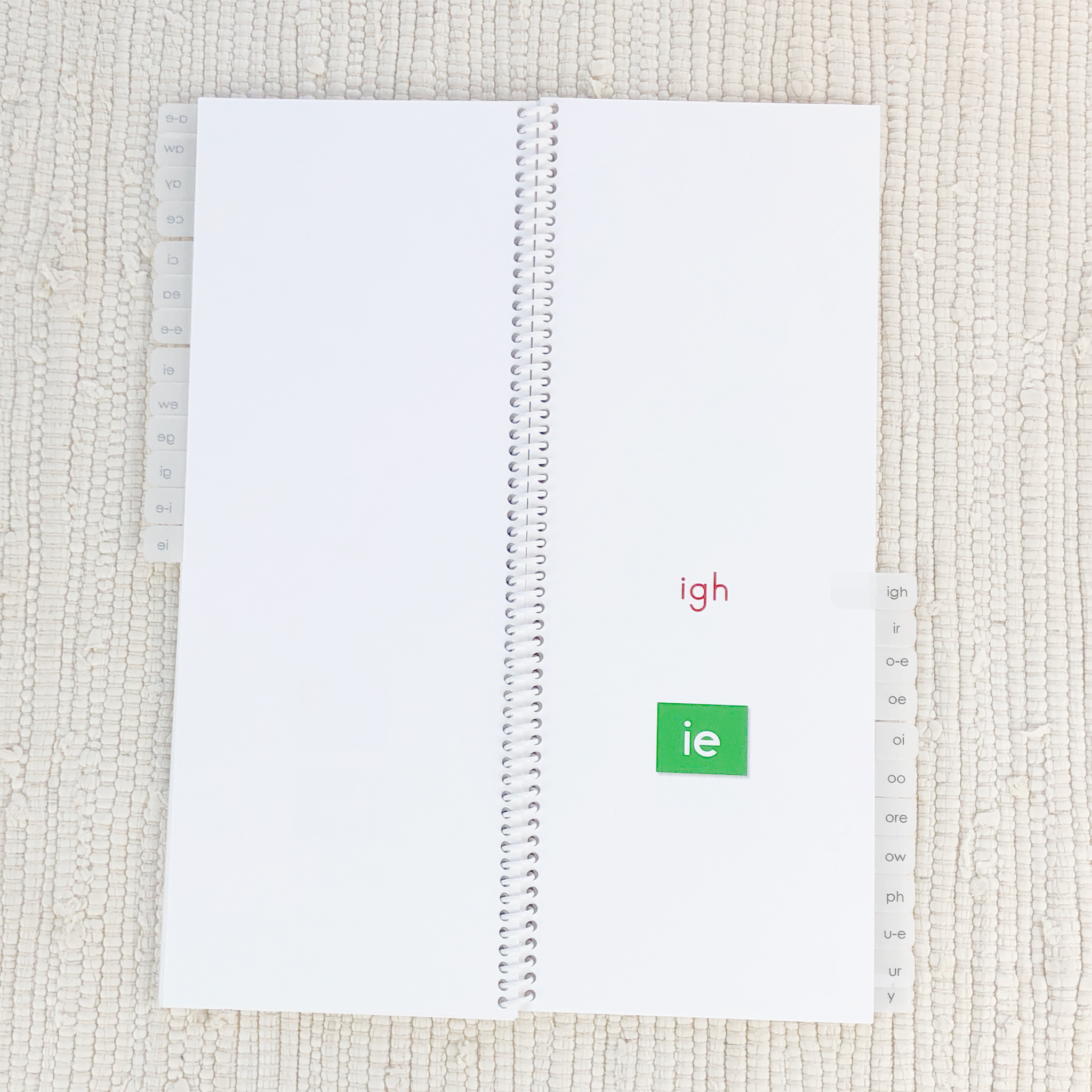
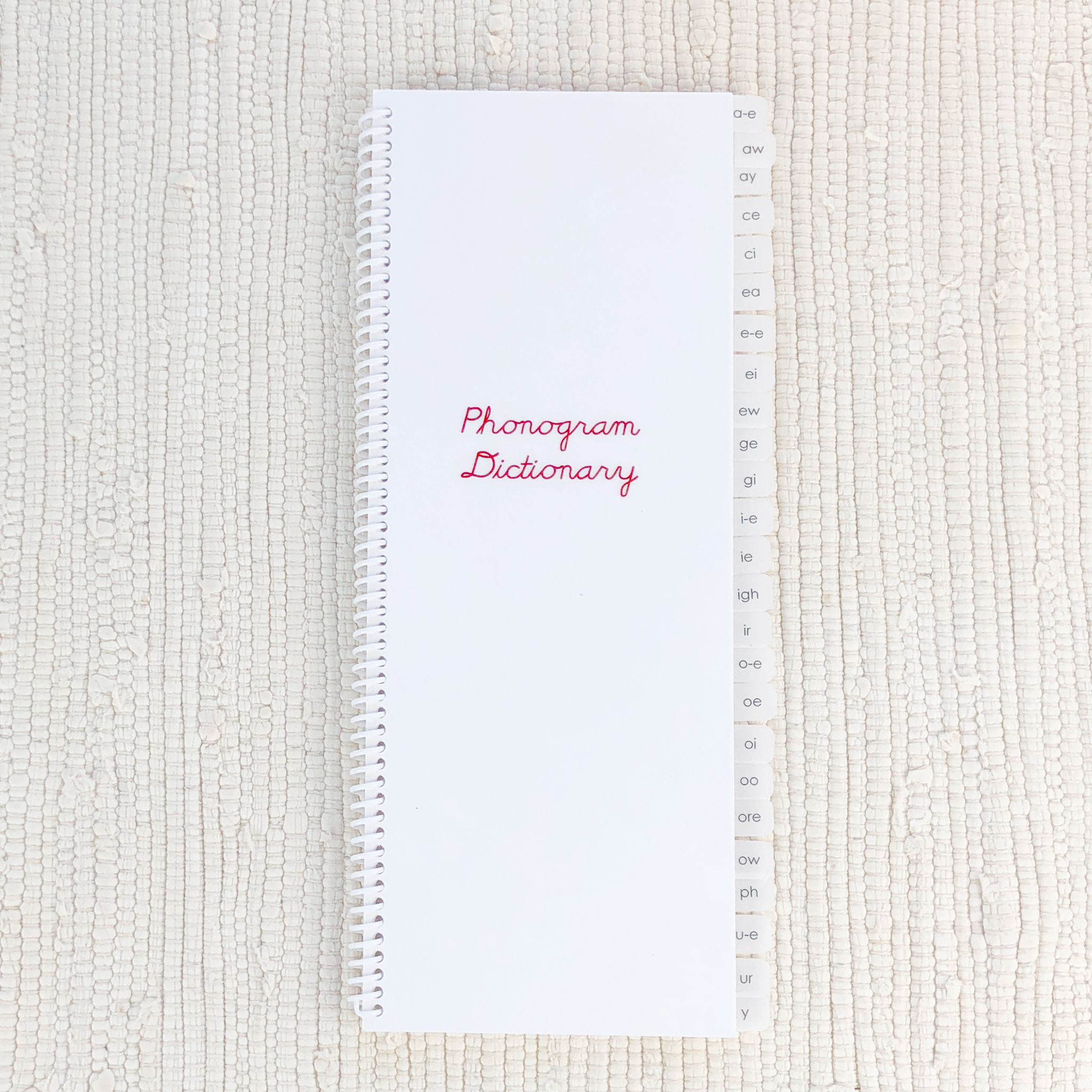
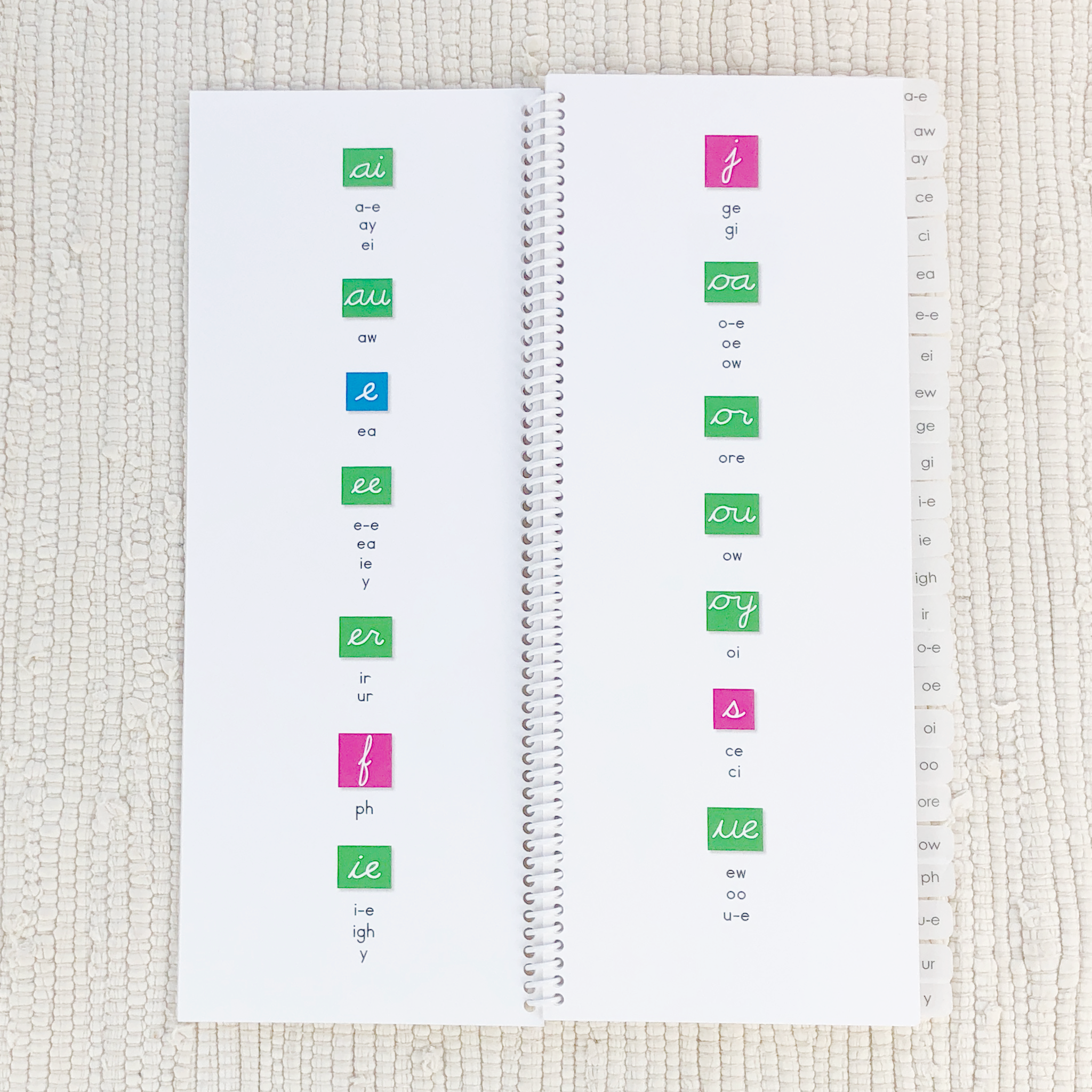
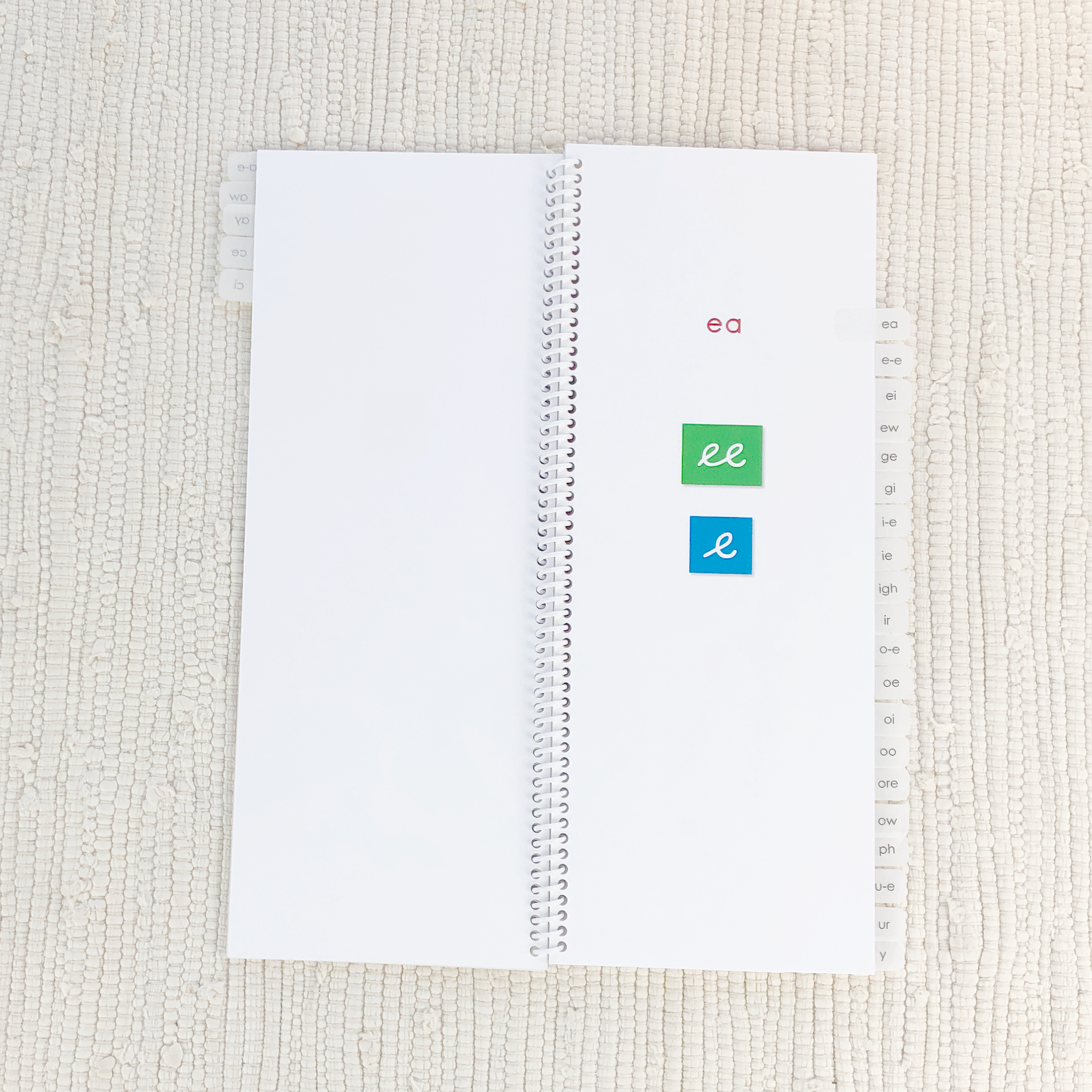
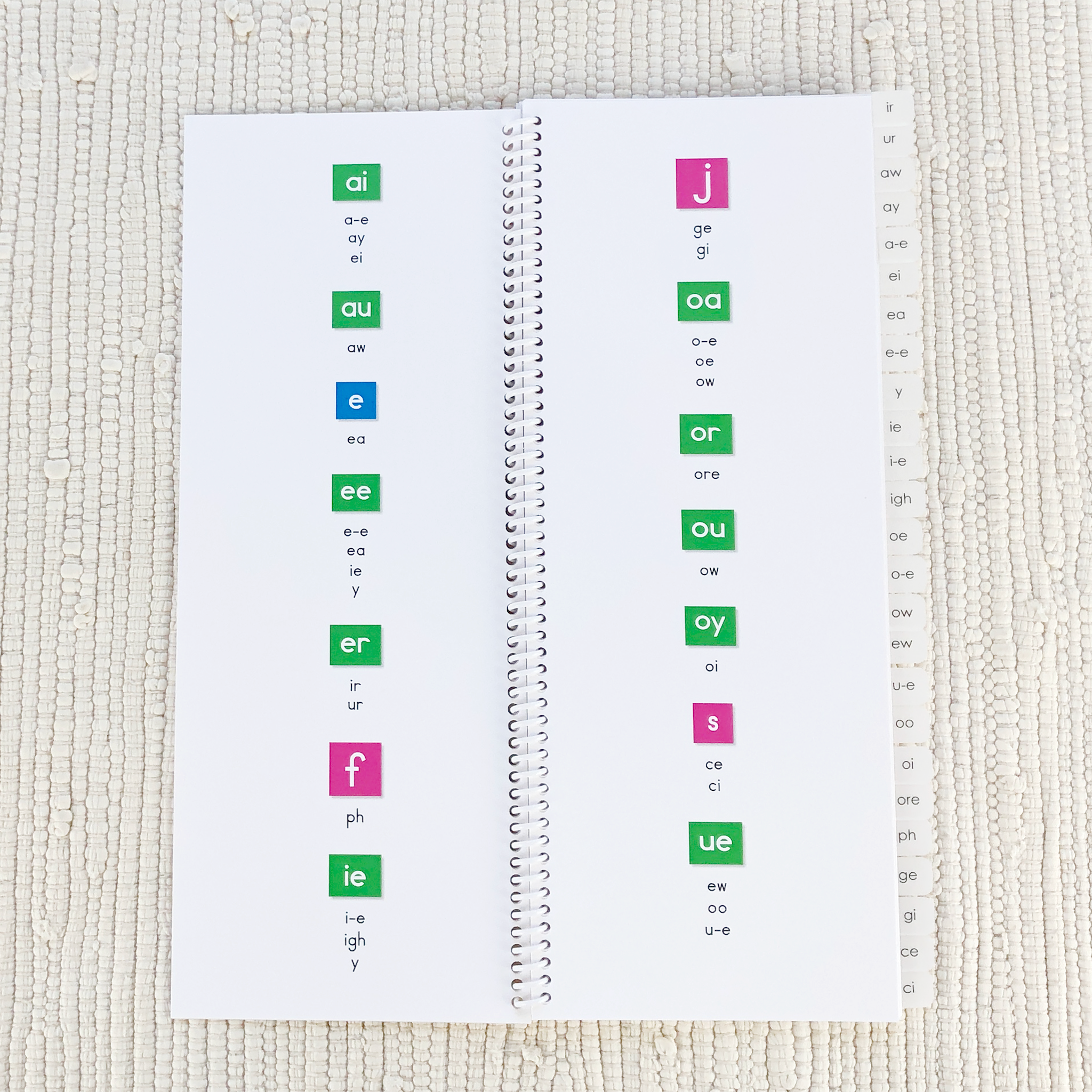
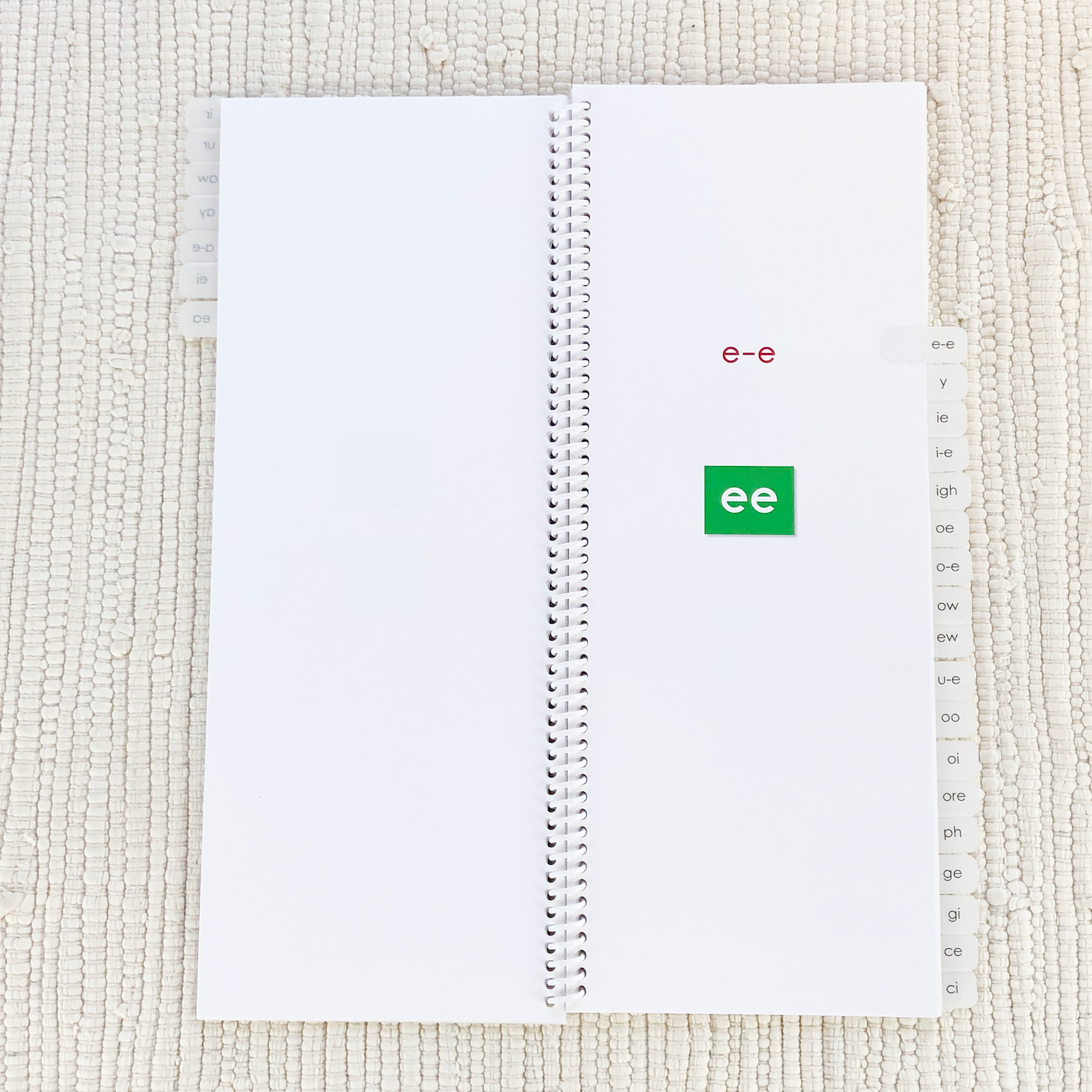
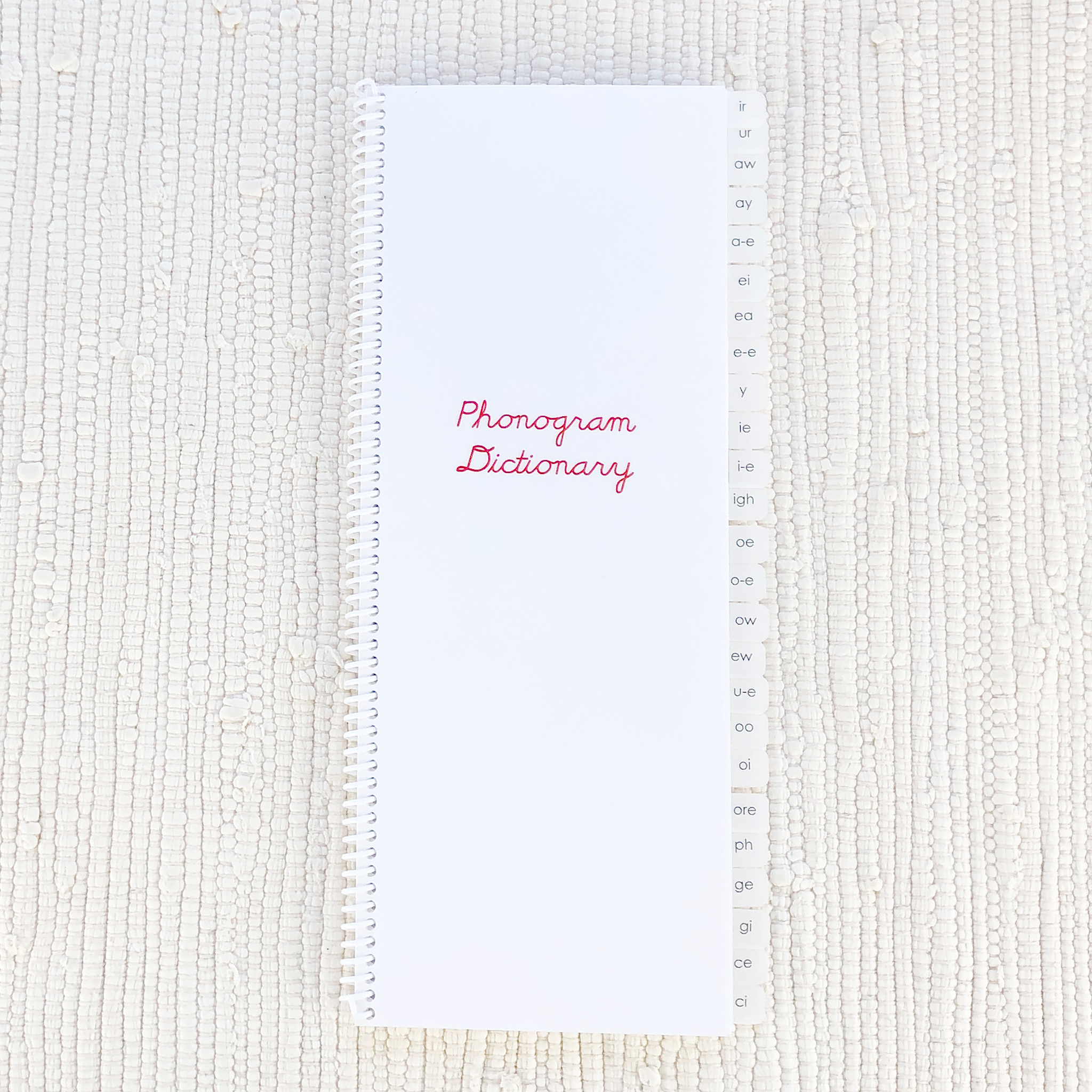
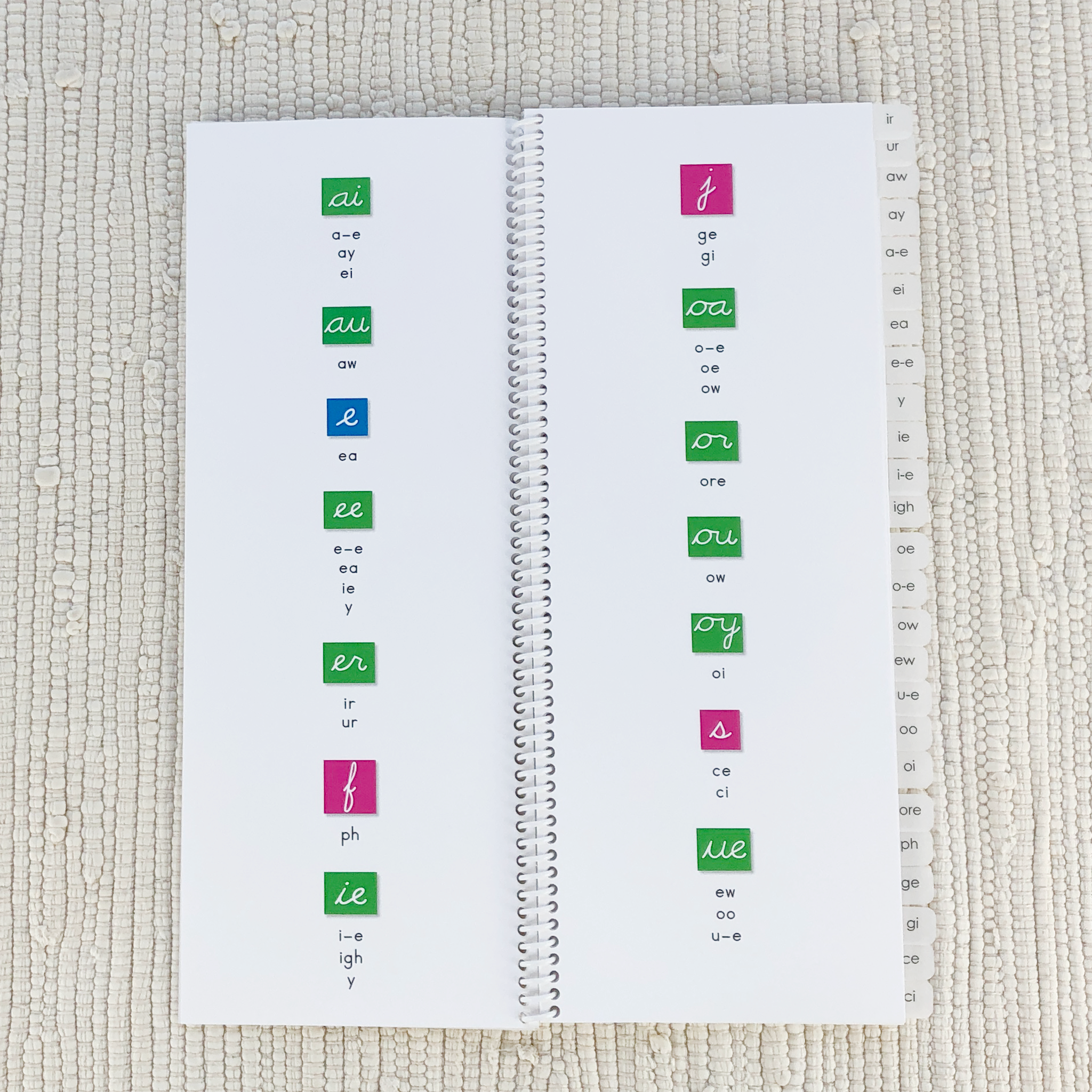
The Phonogram Dictionary is a reference that shows students the key spelling variations in English, grouped with the sounds they make. When a student reads a word with a spelling they don't recognize, they find that spelling on a tab, open to its page, and see which key sound it makes. Students can check for themselves instead of waiting for a teacher.
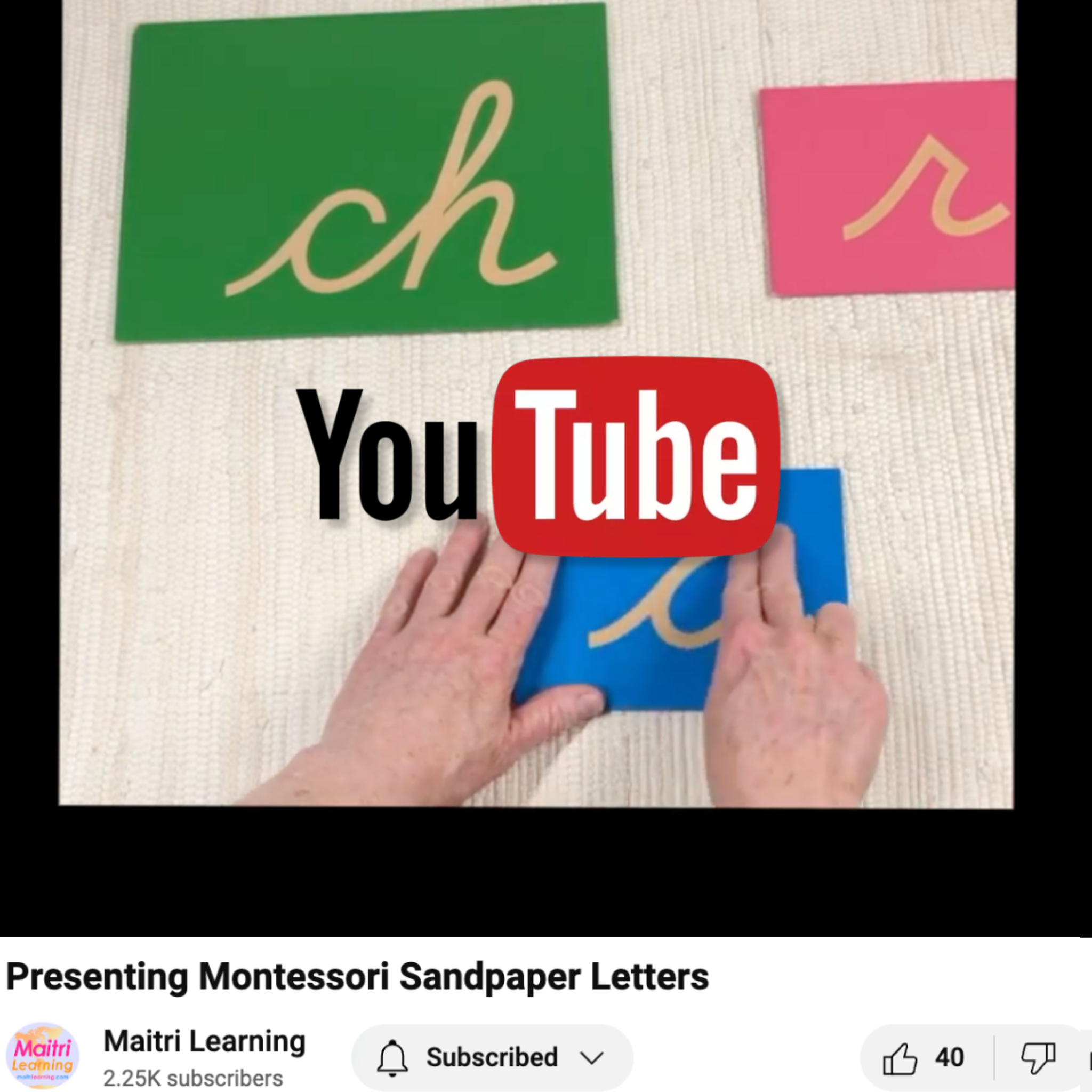
The dictionary is inspired by Muriel Dwyer, the London AMI teacher trainer who adapted Dr. Montessori's phonetic approach for English (a partially phonetic language). Introduce it once a student knows all of the key sounds, as on the green sandpaper letters, and begins asking for accurate spellings.
Every format has the same content. Choose the font you teach and the organization you prefer:
Pairs with our Phonogram Spelling Folders.
Created by a Montessori teacher. Eco-printed in our rural New England office.
Made in the USA. CPSIA compliant.
See how to use the dictionary to find a spelling and its key sound.
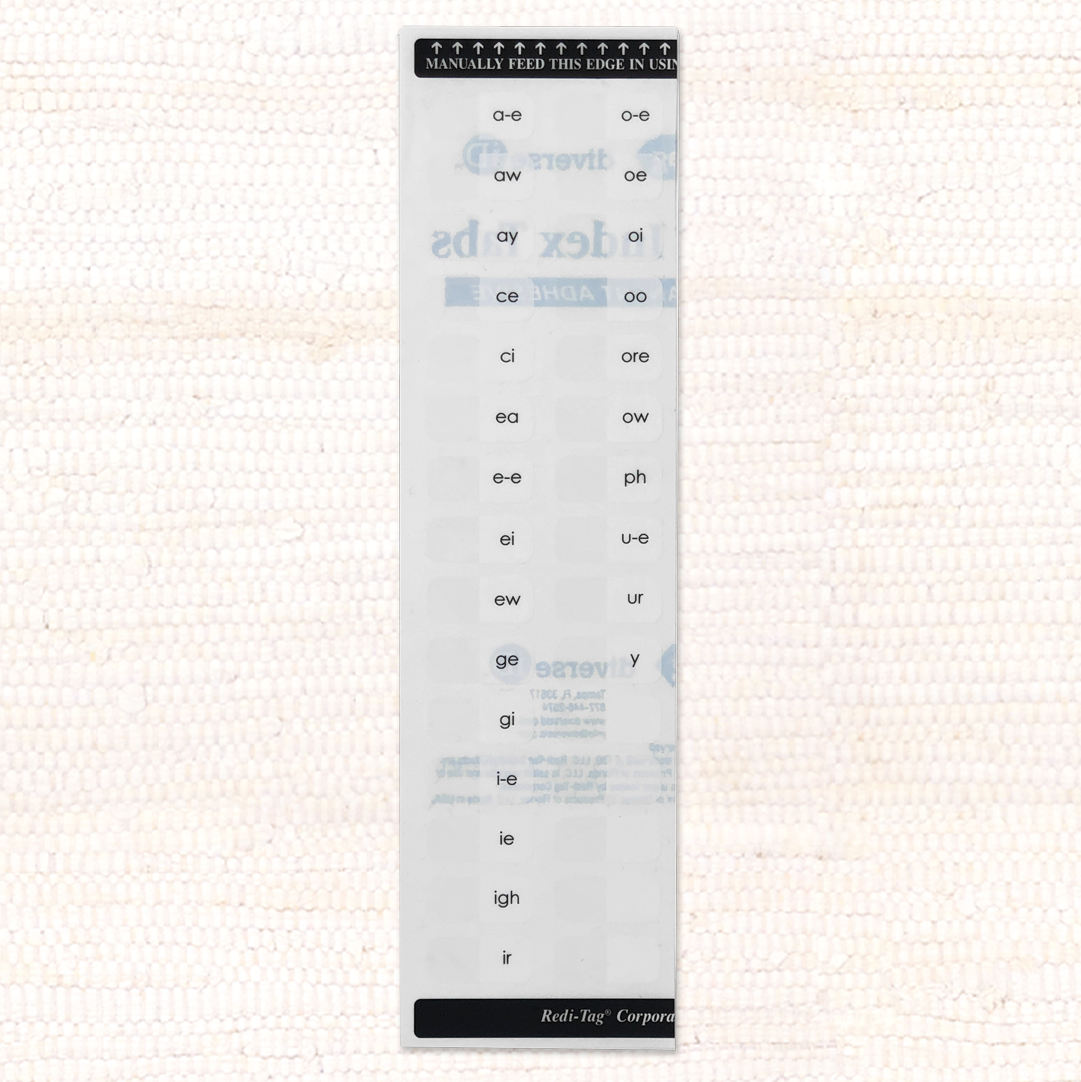
See how to place the tabs on your dictionary.
In Scarborough's (2001) reading rope, decoding and sight recognition are strands of word recognition that grow stronger as students connect sounds to their spellings. English has many ways to spell the same sound, and the dictionary puts them all in one place. Each time a student looks up a spelling, they strengthen that sound-spelling connection. They also learn to find answers on their own, which builds confidence as readers and writers.
The dictionary can also serve as the control of error for the culminating activity of the Phonogram Folders.
We recommend grouping by key sound, which is what Muriel Dwyer preferred. Each time a student skims the tabs, they see the spelling variations for each key sound together, which reinforces them. Choose alphabetical if you prefer a more conventional dictionary layout.
Choose the font your students are learning. If you have a choice, we recommend cursive. If your school or district teaches print, choose print so the dictionary matches what students see every day.
Typically Kindergarten through 3rd grade (about ages 5 to 9), once a student knows all of the key sounds. The dictionary also works well for:
No. The dictionary comes with a set of pre-printed adhesive tabs for you to attach.
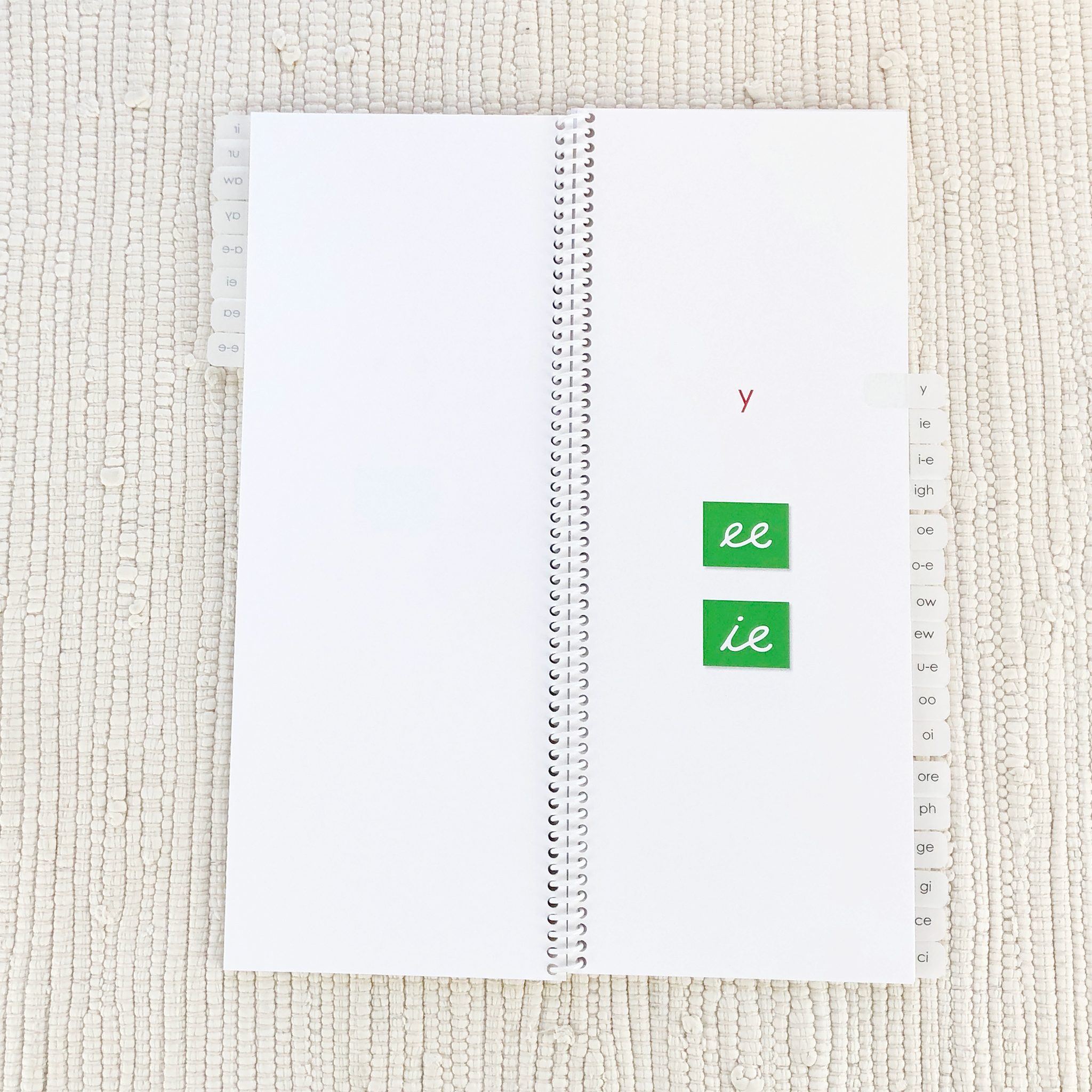
Some spellings make more than one sound. For example, y says "ee" in happy and "ie" in my, so it appears in both the ee and ie Phonogram Folders. In the dictionary, each spelling gets just one page, which shows every key sound it can make. That's why the dictionary has fewer pages, and it helps students see that one spelling can stand for different sounds.
Choose options
Overall rating: 4.75 / 5 from 4 reviews.
Review topics: [].
"Love the way these offer such an organized way to contain materials."
"Fairly easy to put the tabs on. Looks great!"
"It’s a nice book. Not exactly what I had in mind but it is going to work for our purposes in the 3-6 classroom."
"So useful!"
Download a PDF of our materials