
Geography Folders

26 colors available
More Information:
Geography Folders
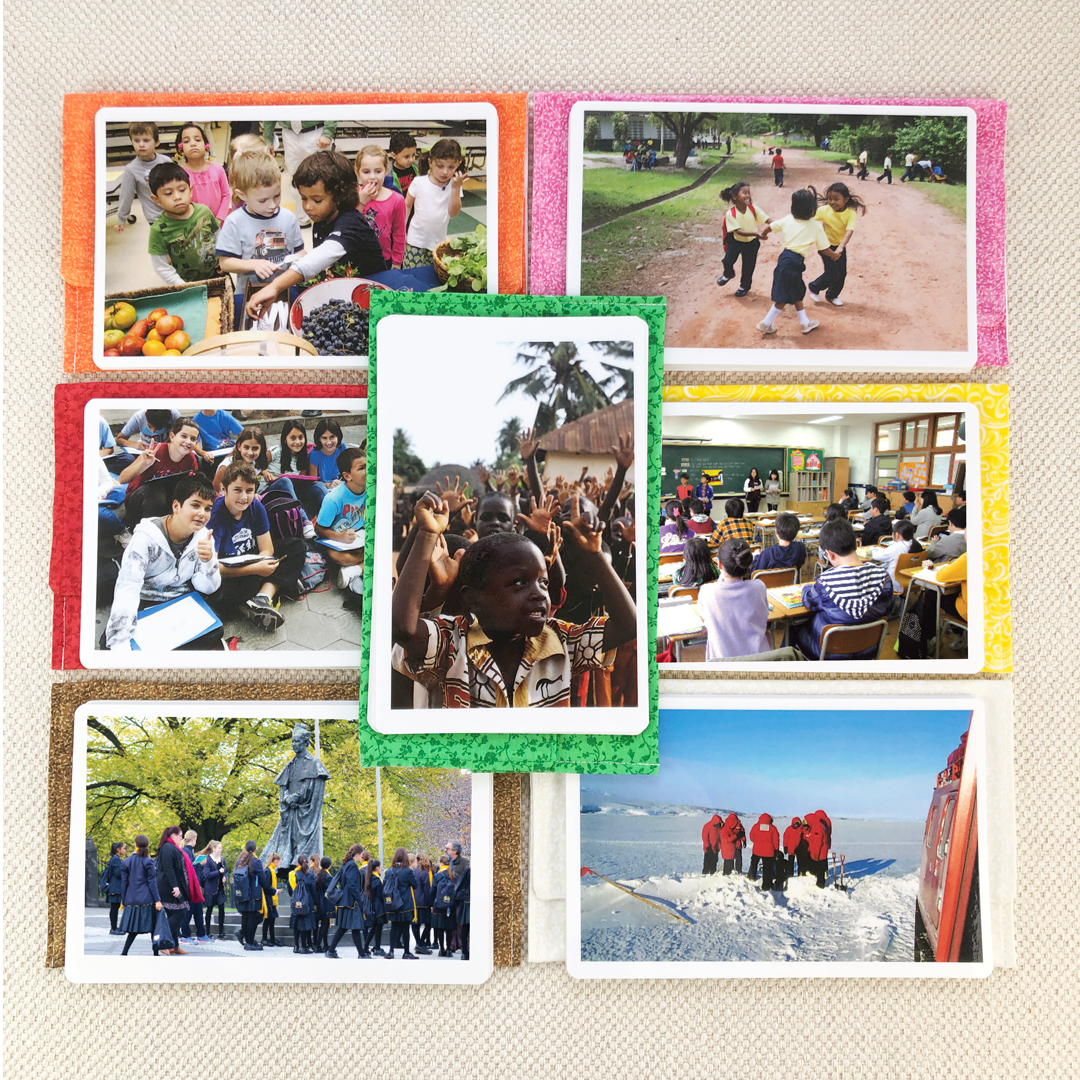
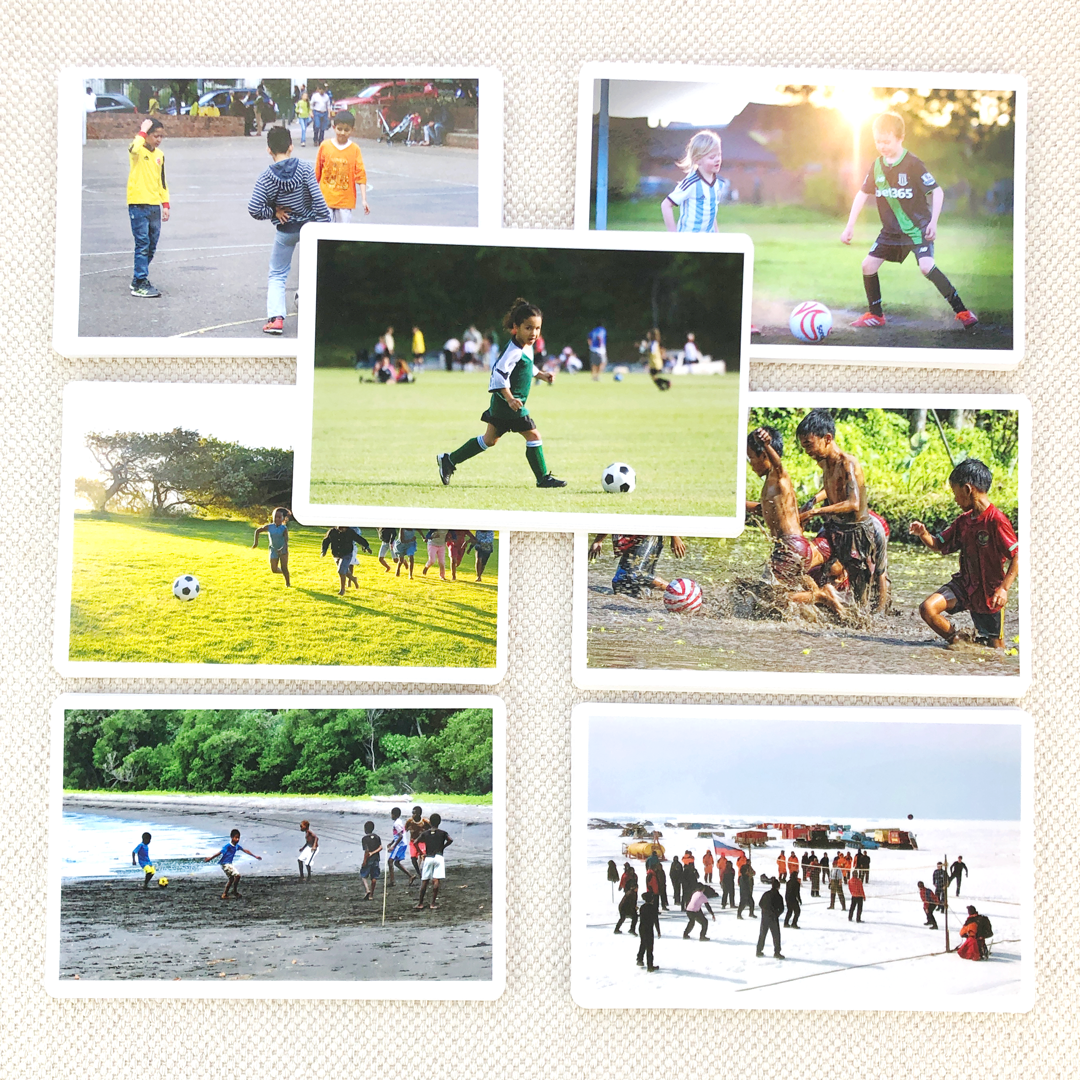
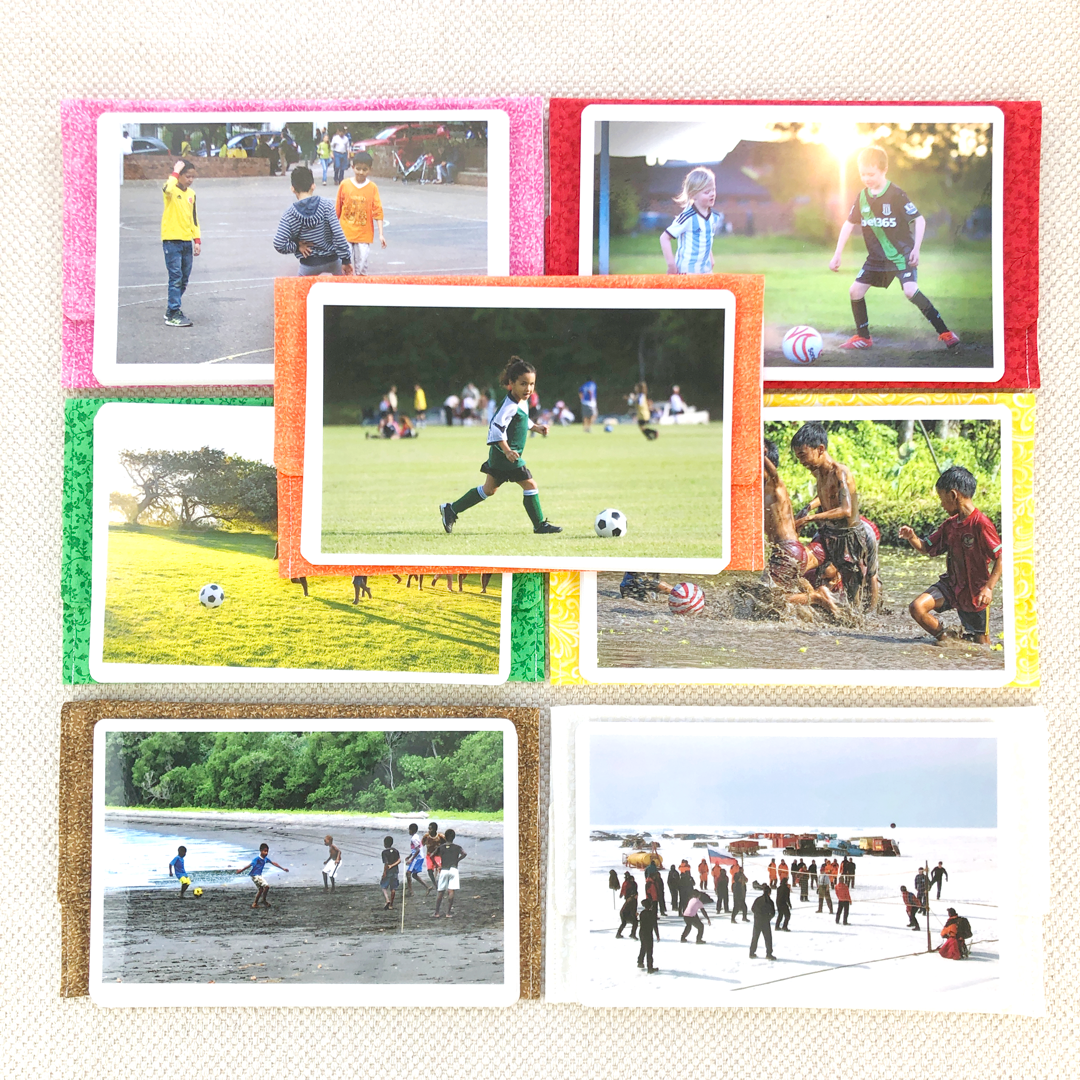
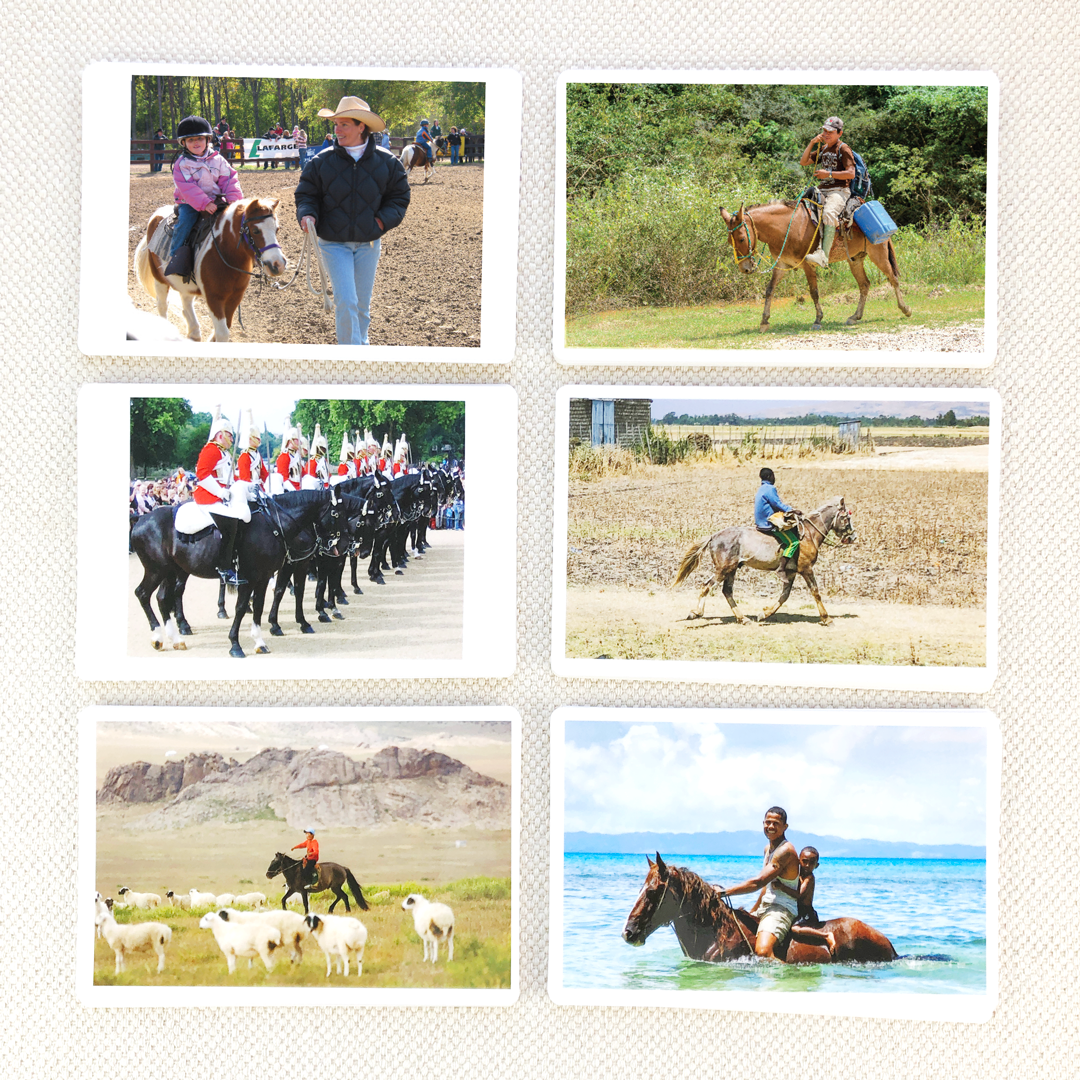
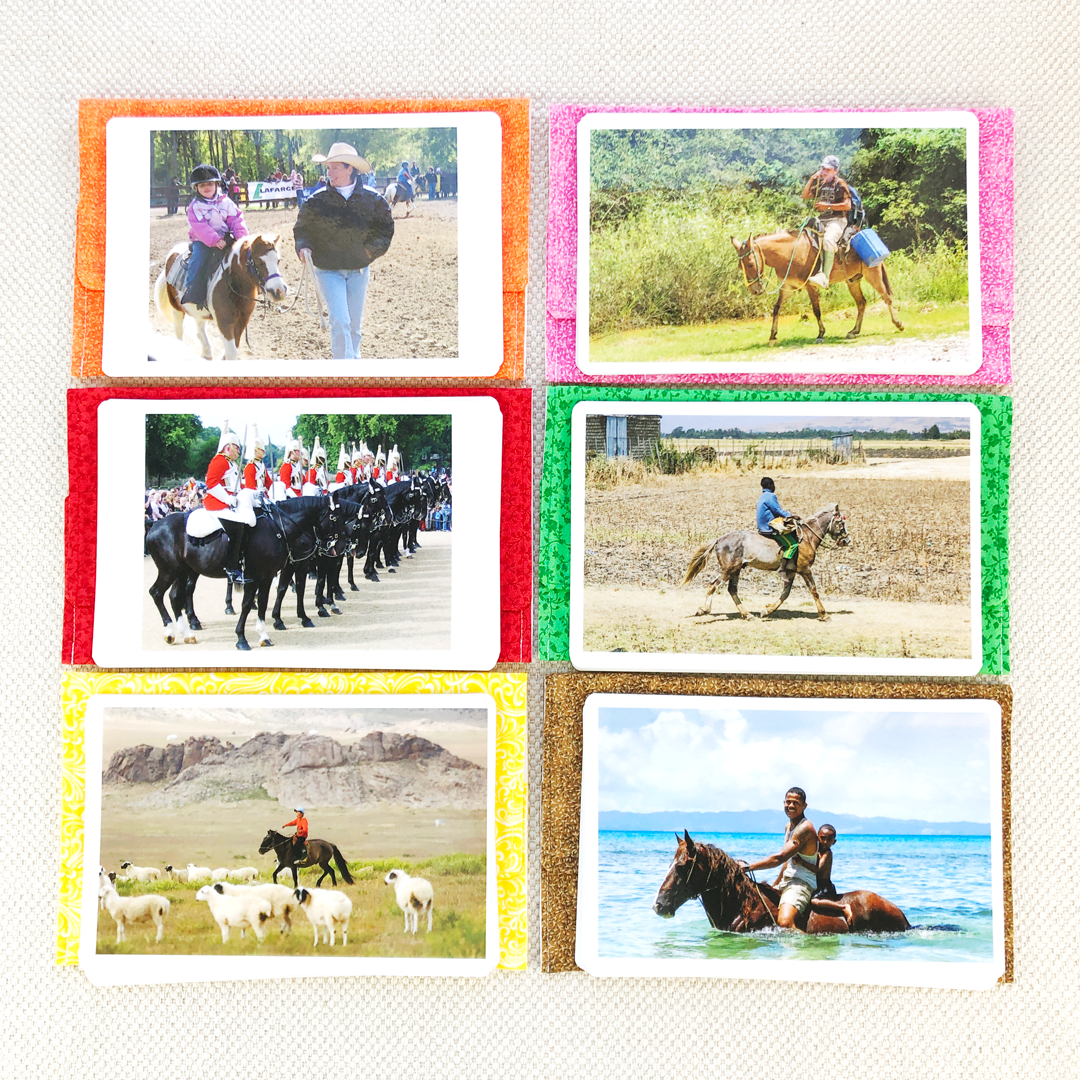
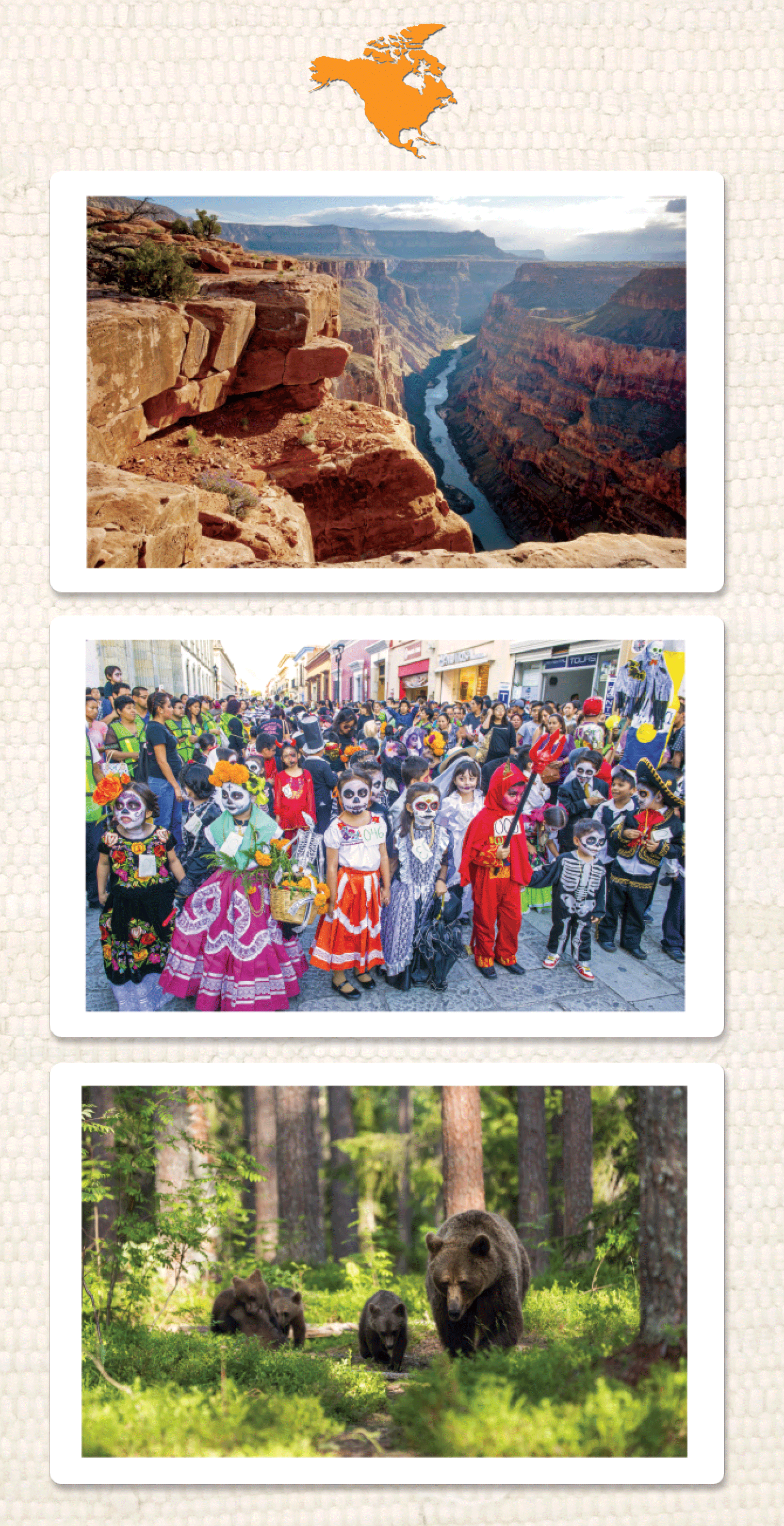
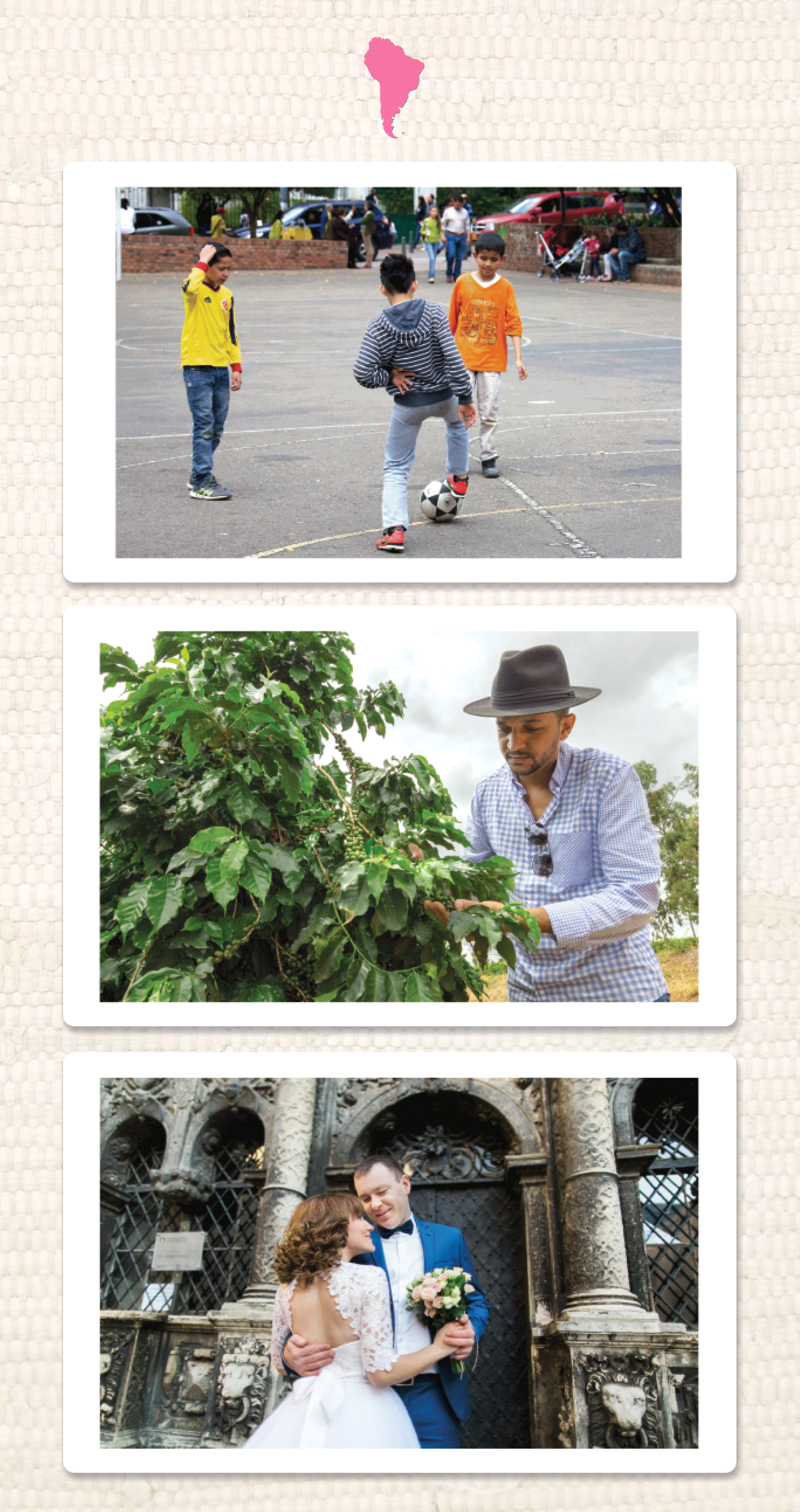
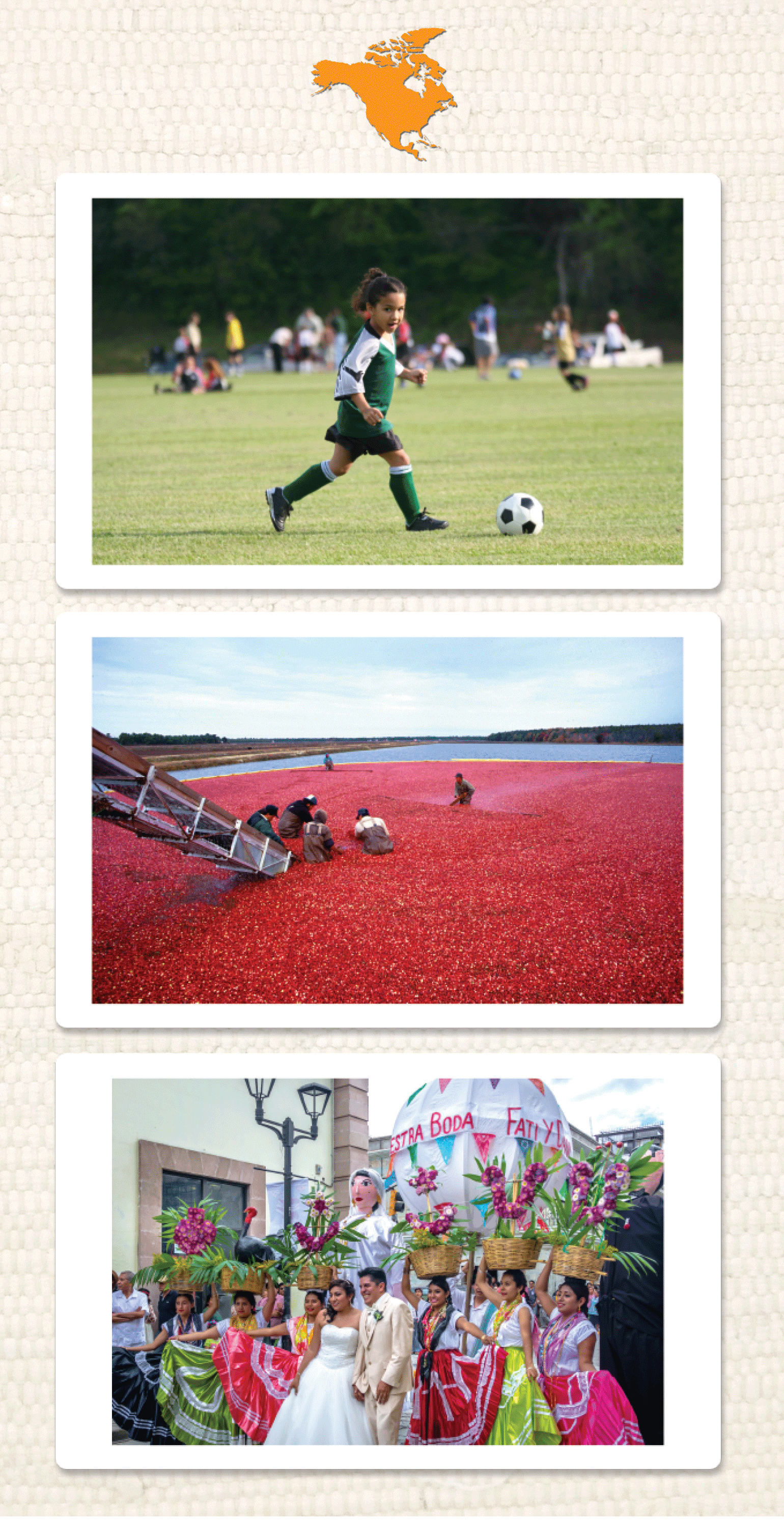
Montessori geography cards are sets of real photographs from each continent, stored in folders color-coded to match the continent. Each series follows the same ten themes on every continent, such as a market, a school scene, or a parade. Students can compare how that part of life looks in Africa, Asia, Europe, and beyond. Discussing these photos, students discover that people everywhere share similar needs and meet them in different ways.
What's in this collection
Series 1 and 2 each have one packet of 10 photos for each of the seven continents: North America, South America, Europe, Africa, Asia, Australia (including Oceania), and Antarctica. Series 3 has six packets and does not include Antarctica. With three series, you have many photos for each continent to rotate through the year.
- Geography: Series 1: an iconic vista, a parade, an iconic animal, a beach, a market, a school scene, a street scene, an iconic building, food vendors, and people fishing
- Geography: Series 2: playing ball, small farming, a wedding, taking a walk, police officers, firefighters, a bus, a desert, a volcano, and a street cleaner
- Geography: Series 3: playing music, a construction scene, riding a horse, a city at night, a favorite food, riding a bike, a train, working with animals, a snow sport, and boating
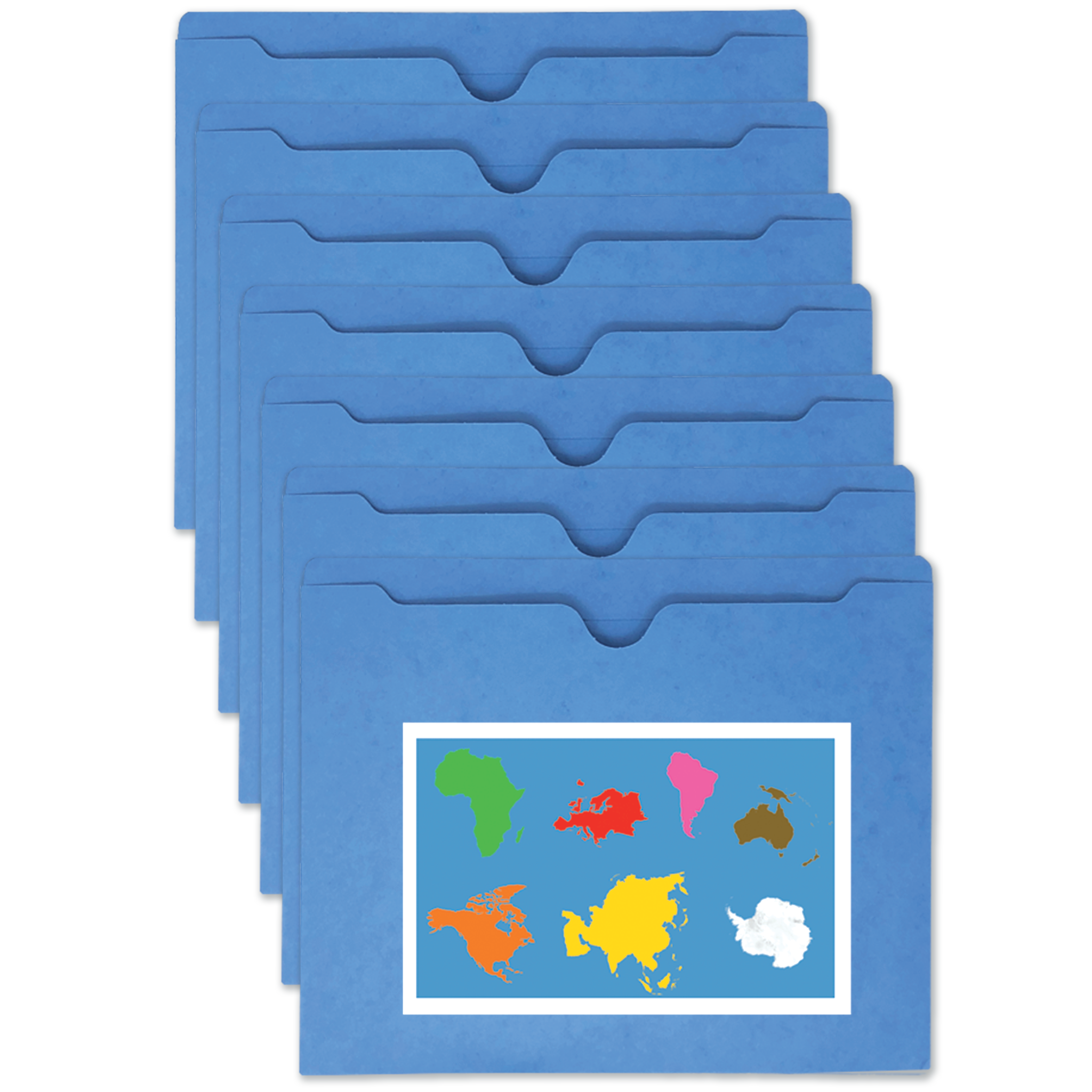
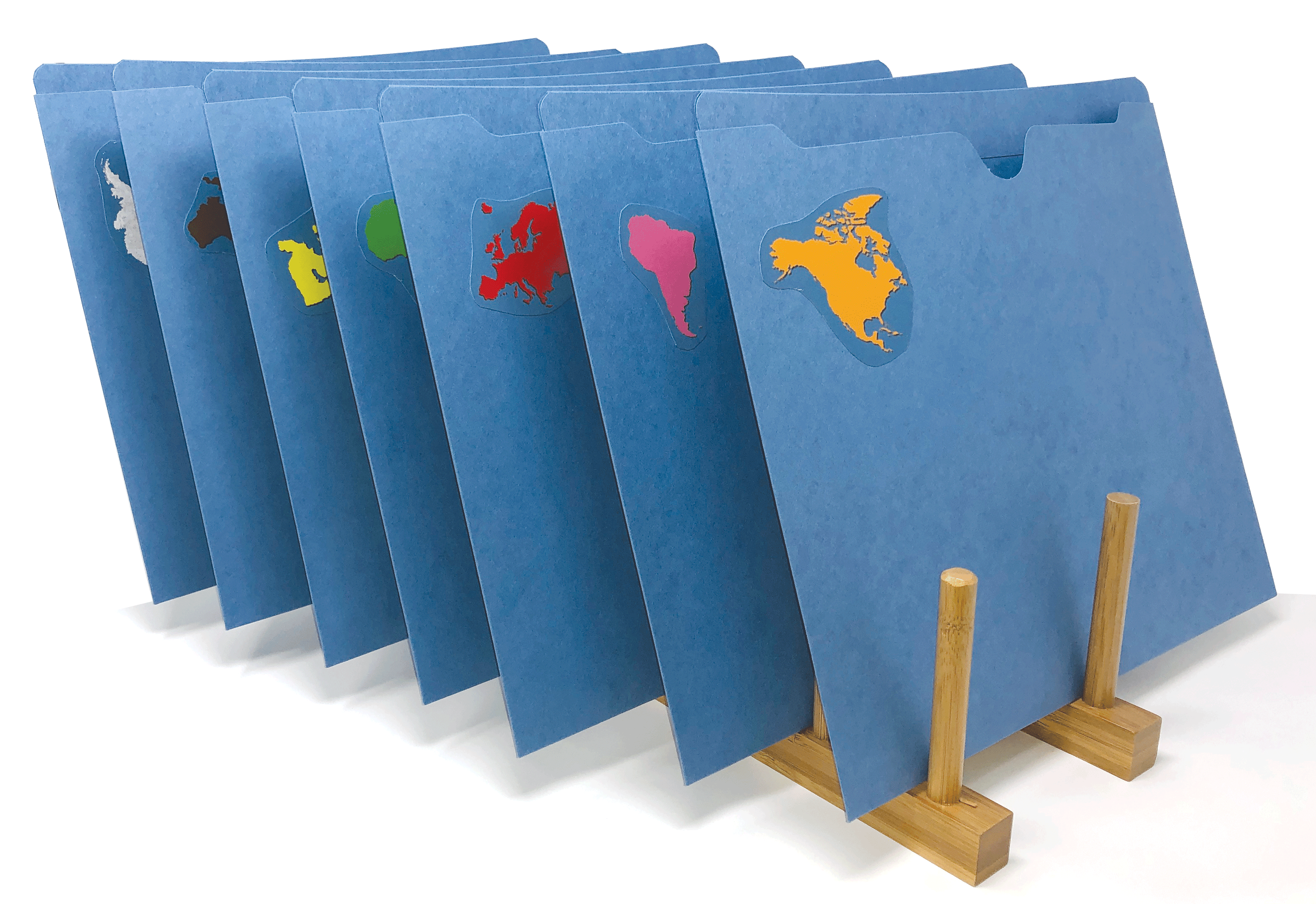
- Geography Folders: blue folders that can be used to display the cards
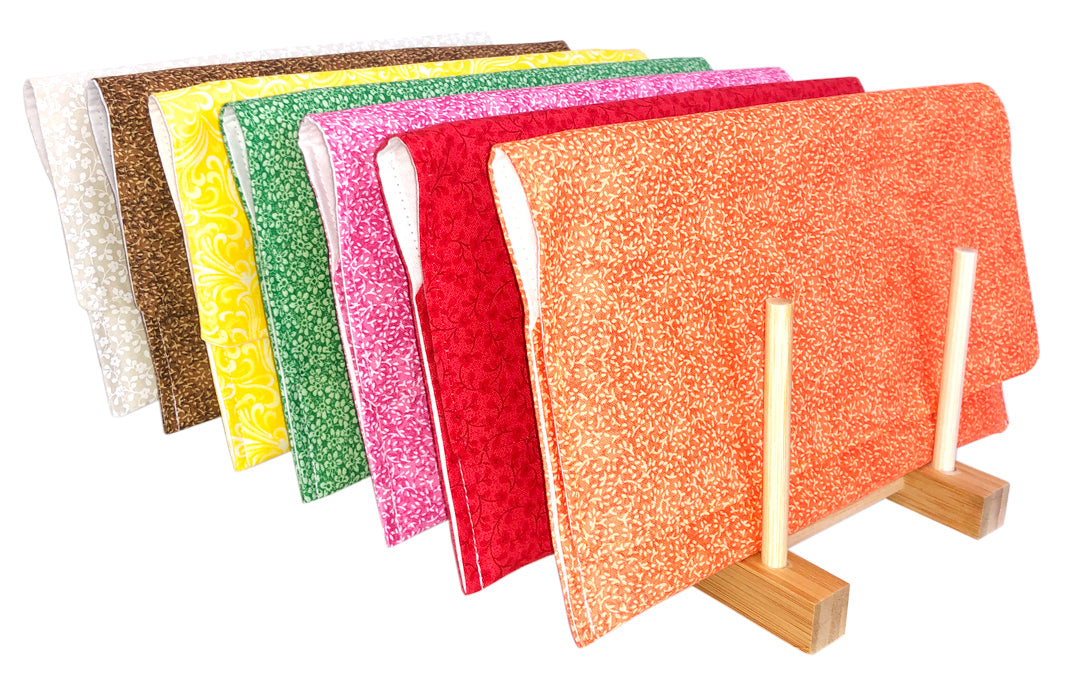
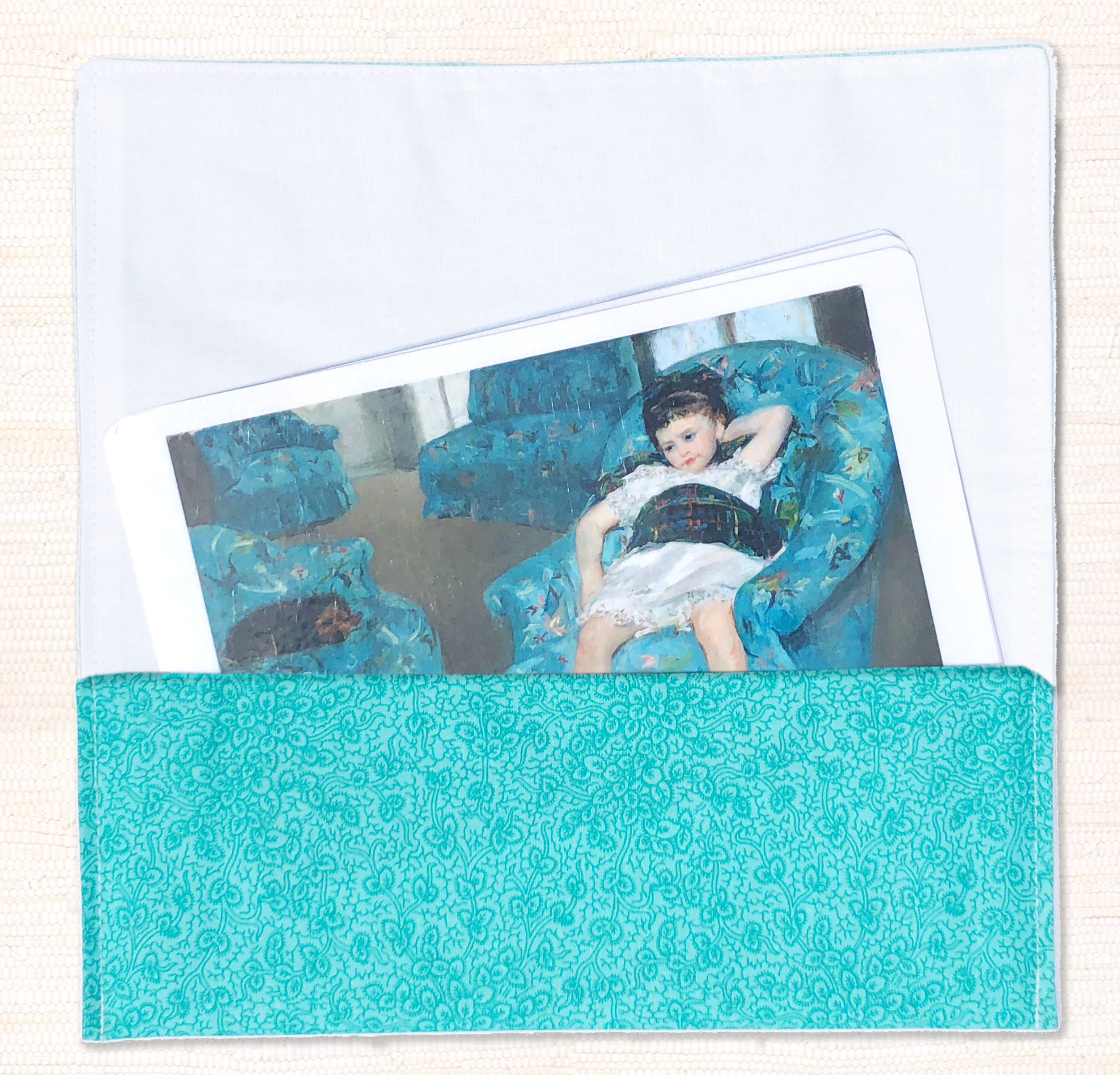
- X-Large Cloth Pouches: cloth pouches that can be used to display the cards
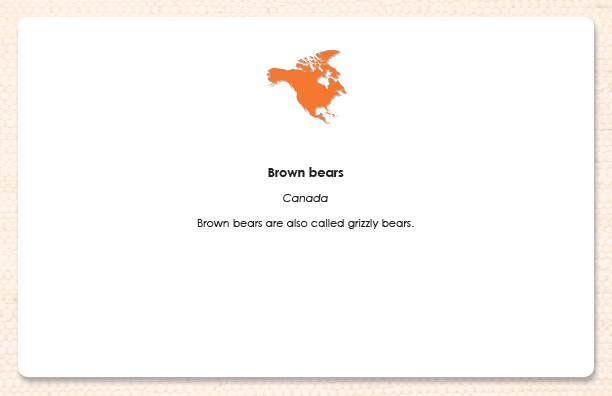
The back of each card shows a color-coded outline of the continent and key information about the photo to help guide the conversation. Cards are approx. 8½" x 5½" and eco-laminated with a food-grade laminate and rounded corners.
Why geography folders matter for reading
Students are naturally curious about how other people live, and a photo of a market or a wedding on another continent invites them to look closely and ask questions. Each time they return to the folders, they practice naming what they see and discussing how it compares to their own lives.
That practice builds vocabulary and background knowledge, two of the language comprehension strands of Scarborough's (2001) reading rope. A student who has discussed a volcano in Asia or a desert in Africa will understand more when they later meet those places in text.
Reference
Scarborough, H. S. (2001). Connecting early language and literacy to later reading (dis)abilities: Evidence, theory, and practice. In S. B. Neuman & D. K. Dickinson (Eds.), Handbook of early literacy research (pp. 97–110). Guilford Press.
How do you use Montessori geography folders?
- Explore one continent: Look through a single continent's folder together. Discuss what students notice in each photo, using the information on the back to guide the conversation.
- Compare one theme across continents: Pull the same theme from each continent's folder, such as every market. Lay the photos side by side and discuss what is the same and what is different.
- Connect to the map: Match each photo to its continent on a world map or puzzle map, using the color-coding as a guide.
- Write about it: Invite students to write about a favorite photo using the movable alphabet or pencil and paper, whichever fits the student.
See our geography folders lesson plan for a full presentation.
Hear what customers say about Geography Folders
What ages are geography folders for?
Typically ages 3 and up. Younger students enjoy looking at and discussing the photos. Older students can compare themes across continents, research further, and write about what they learn.
Which series should I start with?
Either series 1 or 2 works as a starting point, since each one covers all seven continents. Choose the themes most likely to interest your students, then rotate in a new series when interest fades.
How should I store and display geography folders?
Keep each continent's photos in its color-coded folder on the geography shelf, near your world map or globe. You can also display the cards in our x-large cloth pouches. Put out one series at a time, and swap in the next when students lose interest.
Download a PDF of our materials

Follow Us